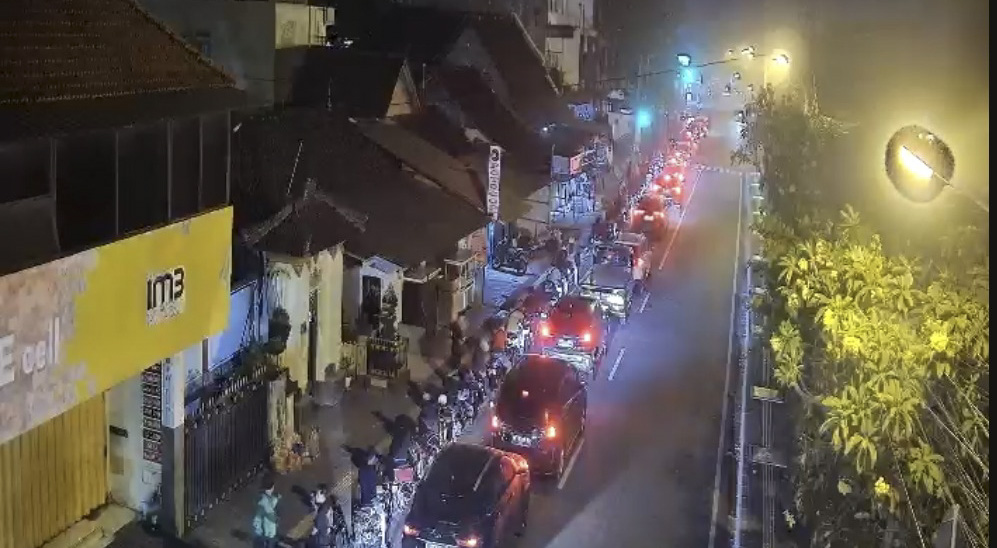
DENPASAR, BALINEWS – The Center of Energy and Resources Indonesia (CERI) has called for an independent audit of PT Pertamina Patra Niaga’s fuel supply chain in East Java, Bali, and Nusa Tenggara following fuel shortages that have triggered long queues at gas stations across Bali and parts of East Java.
CERI Director Yusri Usman questioned whether the shortages could be explained solely by delays involving fuel tankers docking at terminals. He also raised concerns about procurement procedures, stock management, and the possibility that suppliers had failed to fulfill their contractual obligations.
The concerns emerged after Pertamina Patra Niaga announced an additional 57.9 million liters of fuel for Bali between October 14 and 17, 2026.
The additional supply consists of 44.9 million liters of Pertalite and 13 million liters of Pertamax, delivered through the Manggis Fuel Terminal in Karangasem and the Sanggaran Fuel Terminal in Denpasar.
Previously, PT Pertamina (Persero) President Director Simon Aloysius Mantiri attributed part of the supply disruption to difficulties involving a fuel tanker that was unable to dock for approximately 12 hours.
However, Yusri argued that the explanation required further investigation, particularly because fuel shortages had also been reported in parts of East Java, which shares the same operational region as Bali under Pertamina Patra Niaga Regional Jatimbalinus.
“If a fuel tanker was delayed by only around 12 hours, why did shortages occur across Bali and parts of East Java? Bali also has two fuel terminals, Sanggaran in Denpasar and Manggis in Karangasem. This raises questions that need to be addressed,” Yusri said.
He said operational fuel reserves should ideally cover approximately 20 to 25 days of demand. CERI also suspects that Bali’s fuel reserves may have fallen below seven days before the disruption, although this estimate has not been independently verified and requires confirmation through official inventory records.
CERI Questions the 57.9 Million-Liter Supply Increase
According to Pertamina Patra Niaga Area Manager for Communication, Relations and CSR for the Jatimbalinus region, Ahad Rahedi, the additional supply was intended to accelerate the recovery of fuel stocks and strengthen deliveries to gas stations across Bali.
The explanation was also reported by Indonesia's state news agency, ANTARA.
Yusri said the additional supply raised questions about the actual stock levels before the shortages occurred. He called on Pertamina to disclose daily inventory figures for both fuel terminals, including initial stocks, incoming deliveries, daily distribution volumes, and remaining reserves.
“The additional 57.9 million liters of fuel raises questions about how much stock was actually available before the shortages occurred. Pertamina must disclose daily stock resilience data for both terminals,” he said.
Yusri also pointed to Indonesia’s dependence on imported petroleum products, arguing that this should encourage stronger procurement planning and more effective inventory management to prevent distribution disruptions from developing into shortages at the consumer level.
CERI maintains that a comprehensive review is needed to establish whether the shortages resulted from shipping delays, inadequate stock planning, insufficient deliveries, or a combination of factors.
Suspected Supplier Failures Need Investigation
CERI has also raised the possibility that one or more suppliers may have failed to deliver fuel in accordance with their contracts with Pertamina Patra Niaga.
Yusri called for a comprehensive examination of tender documents, supplier contracts, shipping schedules, actual delivery volumes, and fuel receipt records at the terminals.
“CERI suspects that there may have been suppliers who failed to fulfill their contractual supply obligations. Investigators must establish who the suppliers were, how much fuel they were required to deliver, whether deliveries were delayed or fell short, and how Pertamina supervised contract implementation,” he said.
He added that investigators should determine whether the disruptions in Bali and East Java stemmed from the same supply-chain problems or from different causes.
The alleged supplier failures have not been established as the cause of the shortages and would require verification through procurement documents and delivery records.
CERI Calls for Audit of Three Pertamina Patra Niaga Directors
CERI has called for an examination of three Pertamina Patra Niaga directors in accordance with their respective responsibilities: President Director Mars Ega Legowo Putra, Commercial Director Erwin Suryadi, and Downstream Optimization and Distribution Director Hari Purnomo.
According to Yusri, the commercial division should explain the fuel procurement tender process and contract implementation. The downstream optimization and distribution division, meanwhile, should account for stock planning, fuel receipts, and distribution from terminals to gas stations.
“The three directors must be held accountable in accordance with their respective duties and authorities. Procurement problems, supplier failures, or weaknesses in stock management must not be concealed behind explanations involving weather conditions or tanker delays,” Yusri said.
CERI has urged the Ministry of Energy and Mineral Resources, the Downstream Oil and Gas Regulatory Agency (BPH Migas), the Daya Anagata Nusantara Investment Management Agency (BPI Danantara), and Pertamina’s supervisory bodies to conduct an independent audit of the entire fuel supply chain in the Jatimbalinus region.
The proposed audit would cover tender procedures, supplier appointments, fuel stocks before the shortages, contractual compliance, actual delivery volumes, and distribution to gas stations. CERI also wants the effectiveness of regional management and Pertamina Patra Niaga’s executive oversight examined.
Yusri said that if negligence, supply failures, or irregularities were established, the parties responsible should face appropriate action under applicable regulations.
Long Queues Continue Across Bali
While questions remain over the causes of the shortages, long queues have continued to be reported at gas stations in Denpasar, Badung, Tabanan, and Kintamani in Bangli Regency.
Field observations at around 1 a.m. on Thursday, October 15, 2026, found vehicles still lining up at the Latu gas station in Abiansemal, Badung, which operates 24 hours a day.
A Badung resident identified as Nyoman said he had been waiting for approximately an hour after finding that the nearby Sibang gas station had closed before midnight.
“Yes, Bli, I started queuing for fuel at midnight, and I have already been waiting for an hour. I went to the Sibang gas station earlier, but there were few staff members, and it had closed before midnight. That is why I came here to the Latu gas station in Abiansemal,” he said.
Queues stretching hundreds of meters had also previously been reported at several gas stations in Denpasar and Gianyar, disrupting traffic and residents’ daily activities.
Indonesian House of Representatives Commission III member I Nyoman Parta has visited gas stations in Denpasar, Badung, and Tabanan to monitor the situation. He said the recovery effort needed to produce tangible improvements for the public.
Parta proposed temporarily suspending the barcode requirement for fuel purchases, provided such a measure was technically feasible and legally accountable. He also urged Pertamina and gas station operators to maximize the use of available fuel dispensers and seek assistance from the military and police to manage queues and traffic.
“Pertamina needs to act faster. It should not keep saying it is ready without delivering tangible results,” Parta said.
He also proposed that government offices consider temporary work-from-home arrangements and that schools and universities switch to online learning to reduce travel and ease traffic congestion, allowing fuel tankers to move more efficiently from terminals to gas stations.
Bali Governor Wayan Koster had previously introduced a work-from-home policy for October 15–17, 2026, following coordination with Pertamina. The measure was intended to support faster fuel distribution and reduce traffic congestion, while essential public services, emergency response, and security operations were to continue as usual.
Pertamina Expands Operations and Distribution Capacity
In response to the shortages, Pertamina Patra Niaga Regional Jatimbalinus said it was intensifying efforts to restore fuel services by increasing supplies, extending gas station operating hours, strengthening staffing, and deploying additional tanker trucks.
Ahad Rahedi said the company was expanding access to fuel by increasing the number of gas stations operating around the clock. In Denpasar, Pertamina reported that 24 gas stations had previously operated 24 hours a day, with plans to add another 60 stations to the round-the-clock service schedule.
The company was also preparing reserve gas station operators and coordinating with the IX/Udayana Regional Military Command to support nighttime operations. Additional tanker drivers were being prepared to maintain distribution while allowing drivers adequate rest, and some tanker trucks were being redirected from Banyuwangi to Bali.
Pertamina was also seeking to optimize its mobile fuel delivery service for motorcyclists, subject to operational and safety requirements.
“Pertamina Patra Niaga Regional Jatimbalinus continues to optimize all operational areas to accelerate the recovery of fuel services in Bali. We are strengthening supplies, improving gas station readiness, and deploying personnel and vehicles to ensure better service for the public,” Ahad said.
Under a subsequent policy, Pertamina Patra Niaga also expressed support for an odd-even license plate system for Pertalite purchases across Bali from October 17 to 19, 2026, under Bali Governor's Circular No. B.21.500.1/16673/V/DISNAKER.ESDM.
The system applies to both two-wheeled and four-wheeled vehicles. Refueling is limited to 20 liters for four-wheeled vehicles and three liters for two-wheeled vehicles. Ambulances and fire engines receive priority, while trucks are directed to refuel at night.
Pertamina said it would maintain 66 gas stations operating 24 hours a day, comprising 42 in Denpasar and 24 in Badung. In addition, 100 personnel from the IX/Udayana Regional Military Command are supporting nighttime gas station operations, while Bali Police escort fuel tankers to help ensure smooth deliveries.
The company has urged residents to purchase fuel according to their needs, follow official Pertamina information channels, and contact Pertamina Contact Center 135 for assistance or service-related inquiries.
Despite these measures, CERI maintains that transparent fuel inventory data and an independent supply-chain audit are necessary to establish the causes of the shortages. Such an investigation, it says, should determine whether the disruption resulted from tanker delays, stock-planning problems, supplier failures, or other factors, and identify any parties responsible based on verifiable evidence.