DENPASAR, BALINEWS — The Denpasar City National Narcotics Agency (BNN) is raising concerns over evolving methods of illicit drug trafficking, including the use of liquid substances that can potentially be concealed in electronic cigarette cartridges.
Head of the Denpasar City BNN, Police Commissioner Dr. Leo Dedy Defretes, S.H., S.I.K., M.H., said advances in technology and the growing popularity of electronic cigarettes had created new challenges in efforts to prevent illicit drug distribution.
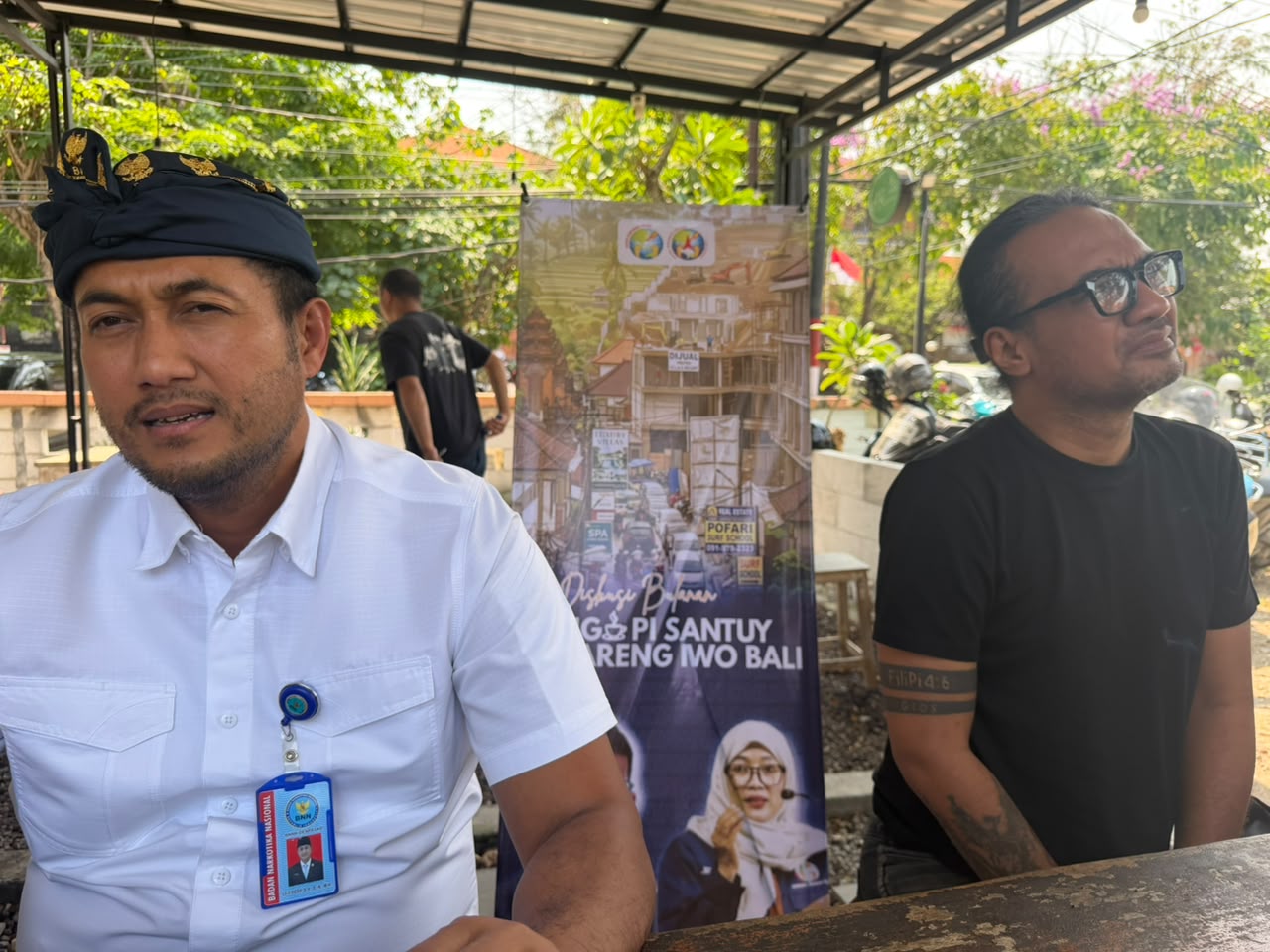
Leo made the remarks during the monthly Ngopi Santuy discussion with the Bali chapter of the Online Journalists Association (IWO) in the Renon area of Denpasar on Wednesday (Sept. 30, 2026).
According to Leo, narcotics that were previously easier to identify in solid forms can now be found in liquid form, making it difficult for the public to distinguish legitimate e-cigarette liquid from liquid containing narcotic substances.
“Illicit substances can be smuggled into liquid used in cartridges, making it very difficult to tell the difference. Is it a legally authorized liquid, or is it a narcotic substance concealed inside an electronic cigarette cartridge?” Leo said.
He said the development reflected changes in both the modus operandi of illicit drug trafficking and the physical forms in which narcotics are circulated.
Leo cited cannabis as an example. Cannabis, traditionally known in the form of plants or plant material, can reportedly be extracted into a liquid form. He also said other narcotic substances could be mixed into e-cigarette liquids.
“In the past, we knew cannabis in the form of tobacco-like material, stems, leaves and seeds. It can apparently be extracted into liquid. Methamphetamine, which is usually recognizable as a salt-like or crystalline substance, has also been found in transformed liquid forms,” he said.
Etomidate Raises Concern
The Denpasar BNN is also monitoring the circulation of etomidate, which Leo described as a new psychoactive substance (NPS).
Leo said several cases involving etomidate had been uncovered in Bali. Based on cases handled by the BNN, the substance can reportedly sell for around Rp5 million.
“There have been several cases involving the discovery of etomidate in Bali. Based on our investigation, etomidate is a new psychoactive substance, and its circulation involves certain groups,” Leo said.
He said the relatively high price could mean that the substance is circulating among consumers with greater financial capacity.
Leo explained that etomidate is a medical drug used as an anesthetic. However, its illicit distribution and misuse have become a concern for law enforcement authorities.
He also referred to videos circulating on social media that allegedly show people under the influence of etomidate experiencing seizures or uncontrollable shaking.
BNN Strengthens Prevention Efforts in Schools
In response to changing drug-trafficking methods, the Denpasar BNN is strengthening prevention efforts in schools.
Leo said children and teenagers require particular attention because they are highly exposed to information technology, social media and content circulating in digital spaces.
“BNN is therefore taking strategic steps to enter schools and strengthen students’ ability to protect themselves through subjects related to narcotics,” he said.
The efforts include programs such as Sobat Bersinar and the Integrated Anti-Narcotics Curriculum (IKAN).
The programs are designed to improve students’ knowledge and ability to resist exposure to narcotics while reducing opportunities for illicit drug distribution within educational environments.
“We are working to reduce the space for illicit drug trafficking. That is why we are building an ecosystem involving government, schools, communities and various groups,” Leo said.
Parents Urged to Act Before Children Become Victims
Leo stressed that the fight against narcotics cannot be carried out by the BNN alone. Families, particularly parents, have an important role in preventing children from being exposed to drug abuse.
He urged parents not to wait until their children or family members become victims before taking action.
“Parents should not only become concerned after their children or family members have been exposed or become victims. By then, they may only become aware of the problem or regret it,” he said.
According to Leo, rehabilitation for victims of drug abuse can take considerable time and potentially affect a child’s future.
Prevention, therefore, needs to begin early by strengthening children’s knowledge and their confidence to reject narcotics.
“The fight against narcotics is not merely about arresting perpetrators. It is also about preventing our children and future generations from becoming victims,” Leo said.
He compared early prevention efforts to immunization, which is provided from a young age to build resistance against potential threats.
Leo said children should be equipped to recognize risks, report suspected drug activity, resist manipulation and confidently say no to narcotics.
“Because narcotics can damage their future and destroy their aspirations,” he said.