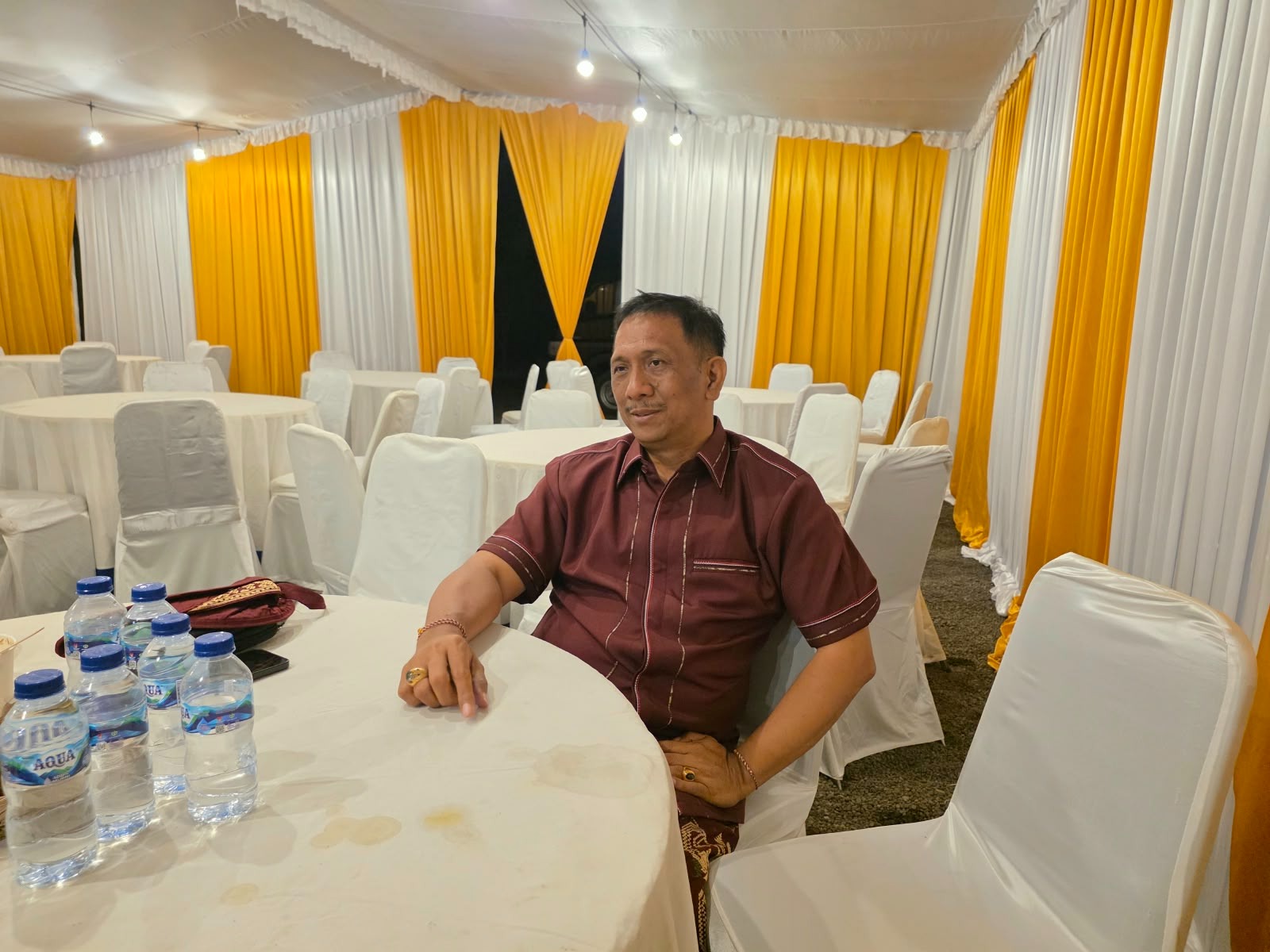
DENPASAR, BALINEWS — The use of the Daily Worker (DW) system in Bali’s tourism industry has come under sharp criticism from I Gede Pasek Suardika, who argues that the system leaves workers without adequate job security or certainty about their future.
“DW is a form of exploitation in the employment sector that, in my view, is very inhumane,” Pasek said.
Pasek argued that the issue is not the concept of daily-paid work itself, but its application in an industry such as tourism, particularly hotels, where businesses can operate for decades.
He said the government should establish stronger contractual and regulatory protections for tourism workers and recognize them as an important asset to the industry.
“If workers are considered assets and part of the capital of the tourism business cycle, then what the government should regulate is how to protect workers as assets,” he said.
Hotel Workers Are Different from Construction Workers
Pasek compared tourism workers with construction workers, arguing that daily employment can be reasonable in certain types of work where a project has a clear completion point.
“For construction workers, once they build a structure and the project is finished, the job is finished. That is different,” he said.
Hotels, however, are fundamentally different, according to Pasek.
“A hotel can operate for decades. Even when its management changes, the hotel itself can continue to operate,” he said.
For that reason, he questioned why workers in the tourism and hospitality industry are often treated as if their employment were temporary or interchangeable.
Pasek stressed that tourism workers possess specialized knowledge and skills and play a significant role in generating economic value.
“Tourism workers are part of the hospitality industry. They have knowledge and skills and generate significant economic resources for the country,” he said.
He argued that workers should not be treated merely as small, replaceable components of a larger business system.
Bali Workers Compared With Overseas Hotel Employees
Pasek also highlighted differences in the welfare of hotel workers employed by the same international hotel chain in different countries.
He cited housekeeping workers in Nusa Dua, Bali, and workers employed by the same hotel chain in Bulgaria.
“A housekeeping worker in Nusa Dua and a housekeeping worker in Bulgaria can work for the same hotel chain, under the same management, yet their welfare can be very different,” he said.
Pasek questioned why workers under the same international hotel management could receive different levels of protection and welfare depending on the country where they work.
“Why are workers at hotels with the same management in Bali treated in such an inhumane way, while workers in other countries are strongly protected? What is wrong?” he said.
Regulation Seen as Key to Protecting Workers
Pasek said stronger government regulation was essential to creating a healthier relationship between employers and workers.
He warned that without adequate regulation, companies could have an incentive to minimize labor costs as much as possible.
“If the government does not care, then it becomes a form of economic power oligarchy. As long as I can make the biggest possible profit, why would I increase my expenses?” he said, describing what he sees as a pattern that has been allowed to continue.
He also pointed to workplace culture as another factor that can make workers reluctant to speak up about their rights.
According to Pasek, some workers in Bali may choose to remain silent because they fear that raising complaints could affect their future employment opportunities.
“They are reluctant to speak up. That is part of the culture,” he said.
He argued that workers may accept unfavorable employment conditions because they are concerned that challenging their employers could make it difficult to find another job.
Bureaucratic Reform Needed Alongside Wage Increases
Pasek also argued that simply increasing minimum wages would not be enough to improve workers’ welfare.
He said the government should first improve the relationship between businesses and the bureaucracy and reduce unnecessary administrative burdens.
“If we want to raise the minimum wage without putting excessive pressure on companies, then we must first improve the relationship between industry and the government, including the cost of government bureaucracy,” he said.
“ Our bureaucracy is very expensive, lengthy and exhausting. If something can be made complicated, why make it easy?” he added.
Pasek said a more efficient regulatory environment could allow companies to improve workers’ wages and welfare without facing unnecessary additional costs.
Bali’s Minimum Wage and Jakarta
Regarding the wage gap between Bali and Jakarta, Pasek said he had long believed that Bali’s minimum wage should be comparable to Jakarta’s, provided that reforms were made to the relationship between businesses and government.
“I have said for a long time that Bali’s minimum wage should be comparable to Jakarta’s,” he said.
However, he stressed that wage increases should be accompanied by broader reforms so that the additional burden is not placed entirely on businesses.
For Pasek, the responsibility for creating a sustainable employment ecosystem ultimately lies with the government through regulation, authority and public policy.
“An ecosystem cannot be created by society alone. The government is the one that can create it through regulation, authority and policy,” he said.
“Create the ecosystem first, and the others will follow,” Pasek concluded.