DENPASAR, BALINEWS – A devastating landslide at Pelaga Eco Park Glamping Retreat in Pelaga Village, Petang District, Badung Regency, has left deep sorrow as search efforts entered their seventh day, with two tourists believed to have been buried beneath the debris still missing.
The two victims are reportedly from Germany and Kalimantan, Indonesia. The incident occurred at approximately 11 p.m. local time on Sunday, November 1, following hours of heavy rainfall in the Pelaga area.
According to reports, soil and debris from a nearby hillside collapsed and swept through several glamping structures located close to a river. Of the four accommodation units affected by the landslide, one was occupied by the two tourists at the time of the incident.
Pelaga Eco Park Director I Ketut Ardana said a joint search and rescue team, involving Indonesia's National Search and Rescue Agency (Basarnas) and the Regional Disaster Management Agency (BPBD), continued efforts to locate the missing tourists.
Search operations have focused on areas along the river and the removal of mud and debris covering the affected site.
"This is already the seventh day of the search. Hopefully, the victims can be found today," Ardana said.
Amid the ongoing search operation, public attention has also turned to questions surrounding the site's construction permits, building conditions, and safety standards, particularly given its location in a natural environment with geographical characteristics that may pose disaster risks.
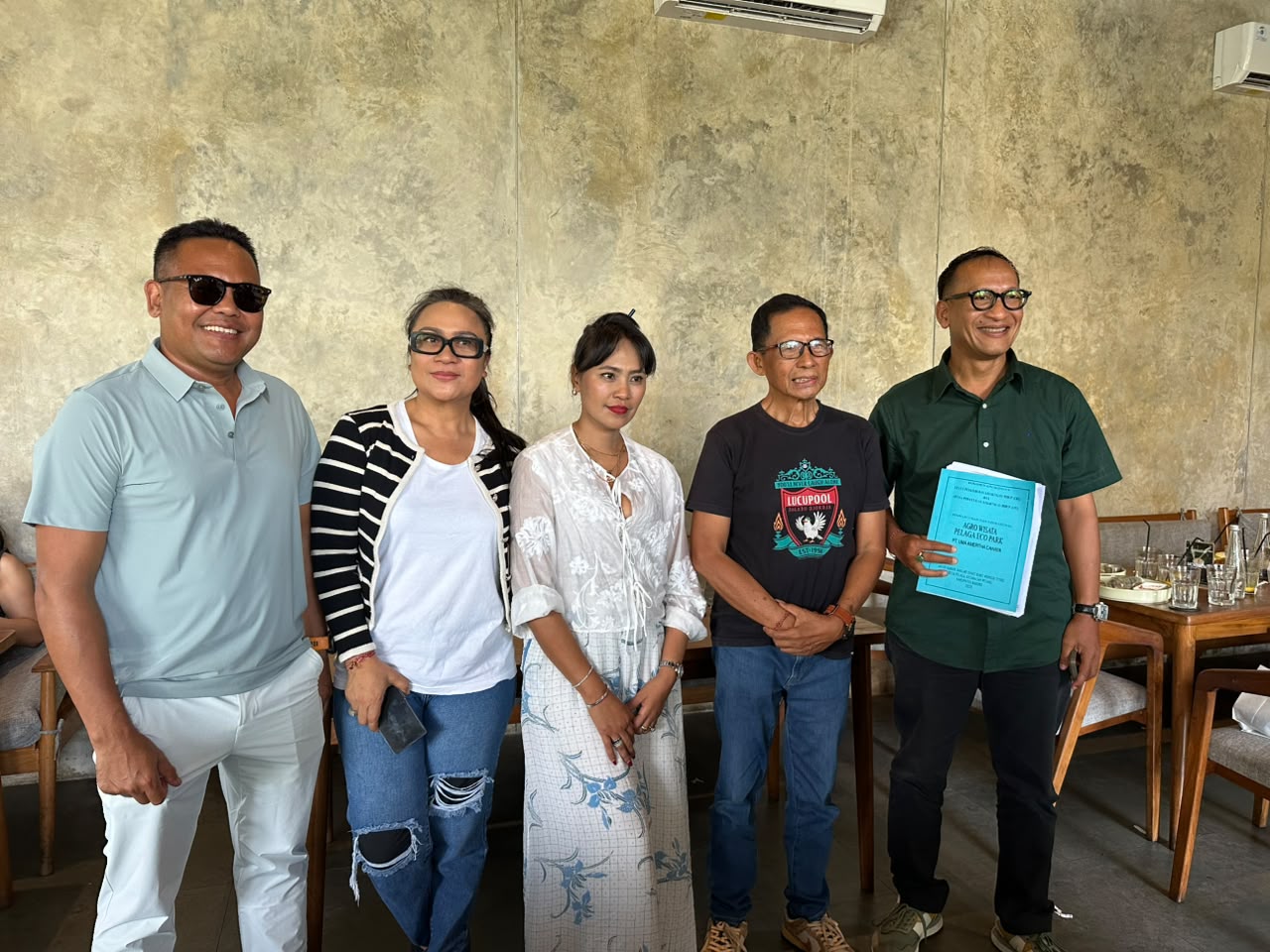
Responding to concerns over the legality of the development, Ardana stressed that the management had pursued the necessary permits from the early stages of the project, including a Building Construction Permit (IMB), which he said had been obtained in 2021.
He explained that the glamping facilities were designed as semi-permanent structures. Their lower sections were built using wood, while the upper sections consisted of tents that could be dismantled and reassembled.
According to Ardana, the entire property covers approximately four hectares, while the developed area accounts for no more than 10 are (1,000 square meters).
He described the development concept as part of the management's effort to preserve the natural environment of North Badung while promoting sustainable tourism.
Ardana said the establishment of Pelaga Eco Park was initially driven by a desire to encourage more balanced tourism development across Bali, particularly in North Badung, an area he believes still has considerable potential for tourism growth.
Support for the management was also expressed by I Gusti Agung Ayu Inda Trimafo Yudha, popularly known as Gek Inda, Chairperson of the Bali Regional Board of the Indonesian Association of Recreation and Amusement Parks (PUTRI) for the 2026–2030 term.
She extended her condolences to the victims' families and expressed moral support for the Pelaga Eco Park management as it faces the tragedy.
Gek Inda noted that natural disasters could occur at any time and in any location. Based on the information available to her, she said the management had obtained an IMB for the development.
She also highlighted the importance of government guidance and public outreach whenever administrative licensing requirements change, including adjustments involving the Online Single Submission (OSS) system and the Indonesian Standard Industrial Classification (KBLI).
Meanwhile, Pelaga Eco Park Commissioner Jro Mangku Ni Nyoman Ayu Arni explained that the development of the tourism site began during the COVID-19 pandemic, when the family and members of the local community worked together to clear the land through mutual cooperation.
Arni said the family had made efforts from the beginning to comply with licensing requirements in accordance with the regulations applicable at the time.
She added that the building permit allowed construction covering up to approximately 30 percent of the total land area. However, she claimed that the actual development occupied no more than 10 percent.
Beyond developing a nature-based tourism destination, the management also said it had involved local residents in its operations. Most of its employees reportedly came from Petang and Auman villages.
Arni said the development was intended not only to introduce the tourism potential of North Badung but also to create economic opportunities for surrounding communities.
Despite the management's explanations regarding its permits and construction concept, the tragedy has raised several important issues that warrant further attention.
These include the need to evaluate building safety, hillside stability, the geographical conditions surrounding the river, and disaster mitigation measures at nature-based tourism destinations.
The incident serves as a reminder that legal permits and semi-permanent construction concepts must go hand in hand with proper safety standards, environmental risk assessments, and preparedness for extreme weather conditions.
For now, the primary focus remains on locating the two missing tourists. Their families and the wider community continue to place their hopes in the joint search and rescue teams, as efforts to find the victims continue.
The Pelaga Eco Park tragedy is not merely a difficult test for the site's management. It should also serve as an important moment for reflection and evaluation among all stakeholders in Bali's tourism industry, reinforcing the principle that human safety must always come first in the development of tourism destinations.