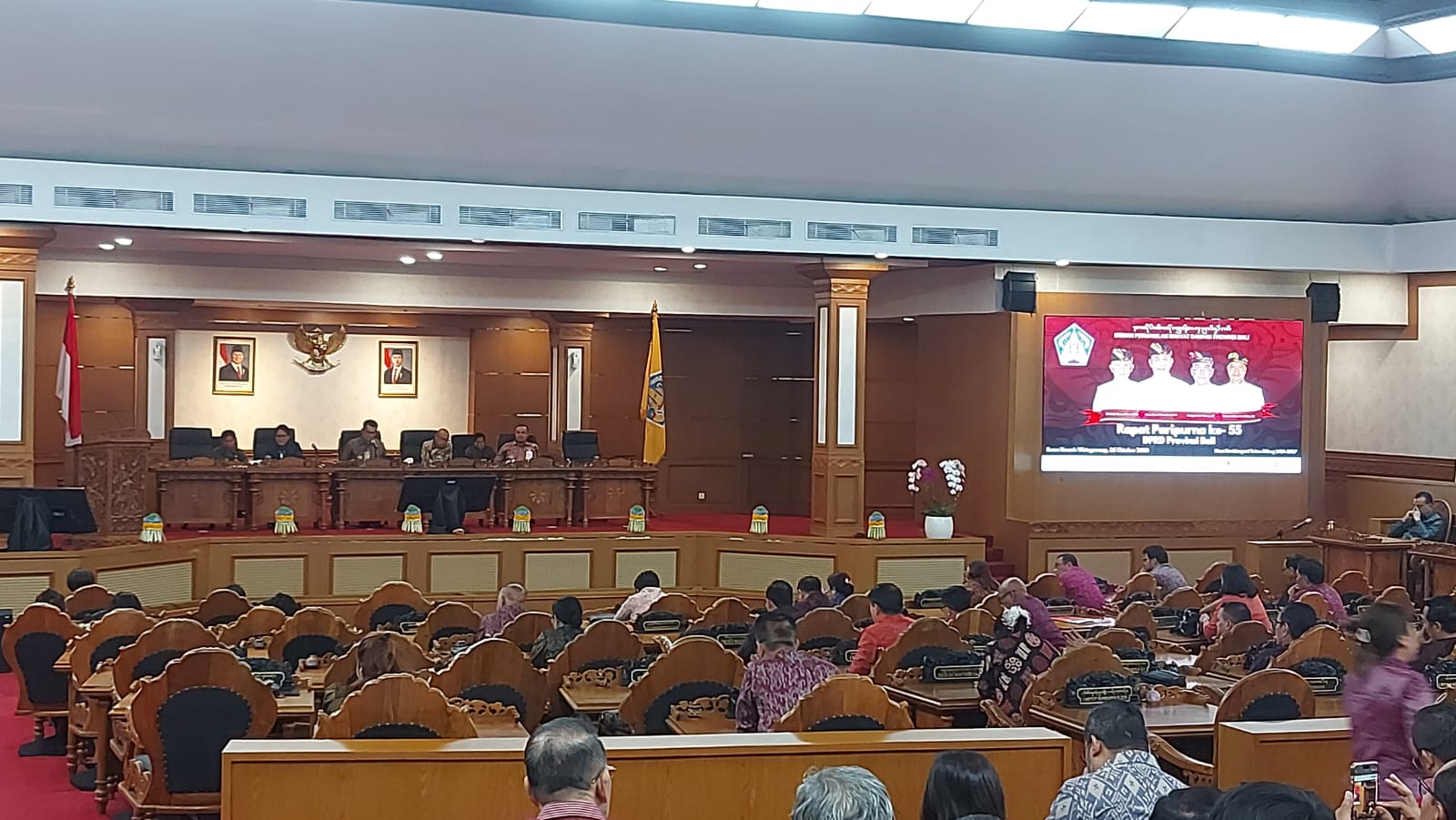
DENPASAR, BALINEWS – The Democratic-NasDem Faction of the Bali Provincial Legislative Council (DPRD) has raised concerns over a proposed 58.1% reduction in capital expenditure in Bali’s 2027 draft regional budget, calling on the provincial governor to explain the potential impact on infrastructure development and public services.
The faction presented its general remarks through I Komang Wirawan, S.H., during the 55th Plenary Session of the First Session Period of the 2026–2027 Legislative Year on Monday, October 26, 2026.
According to the faction’s assessment, capital expenditure is projected to fall to IDR 337.8 billion in 2027, down IDR 468.3 billion, or 58.1%, from IDR 806.2 billion allocated in 2026. Capital expenditure stood at IDR 773.6 billion in 2025.
The faction questioned whether the proposed reduction reflects fiscal constraints or indicates that most infrastructure needs have already been met. It requested clarification from the provincial government on the reasons for the decline and its implications for the pace of development across Bali.
The faction also highlighted a projected decline in regional revenue of IDR 837.9 billion, or 23.78%, from more than IDR 6.5 trillion in 2026 to more than IDR 5.7 trillion in 2027. Meanwhile, locally generated revenue, known as Pendapatan Asli Daerah (PAD), is projected to increase by IDR 325.4 billion, or 7.68%, from more than IDR 4.2 trillion to more than IDR 4.5 trillion.
To strengthen fiscal independence, the faction recommended that the provincial government expand the digitalization of tax and levy collection, optimize the use of regional assets, improve taxpayer compliance, develop new sources of locally generated revenue, and improve the performance of regional-owned enterprises.
Another major concern was the projected 50.31% decline in transfers from the central government. These transfers are expected to fall from more than IDR 2.31 trillion in 2026 to more than IDR 1.14 trillion in 2027. The proposed budget does not yet include several transfer components, including revenue-sharing funds, physical and non-physical special allocation funds, and fiscal incentives.
The faction urged the Bali Governor and provincial administration to strengthen communication and strategic coordination with the central government to secure higher transfer allocations or, at minimum, maintain funding at the 2026 level.
In the education sector, the faction questioned a proposed reduction in the budget allocation for the Bali Provincial Education, Youth, and Sports Office, from more than IDR 1.9 trillion in 2026 to more than IDR 1.3 trillion in 2027.
Although education spending is projected to account for 21.68% of the relevant budget allocation, above the 20% threshold stipulated in the cited requirement, the faction requested clarification on whether the reduction could affect the quality and equitable distribution of educational services, particularly in senior high schools, vocational schools, and special-needs schools.
The faction also sought an explanation for personnel expenditure projected at more than IDR 2.1 trillion, equivalent to 35.88% of total regional expenditure, excluding teacher allowances allocated through intergovernmental transfers. It asked the provincial government to clarify how the figure is calculated and whether it complies with the applicable 30% maximum limit, including whether certain components are exempt from the calculation.
Tourism-related revenue was another issue raised during the session. The proposed target for the foreign tourist levy in 2027 is IDR 600 billion, an increase of IDR 100 billion, or 20%, from the IDR 500 billion target for 2026.
The faction asked the provincial government to explain the basis for the higher target and ensure that the revenue is directed toward improving environmental quality, preserving Balinese culture, and developing infrastructure.
Beyond the budget proposal, the Democratic-NasDem Faction addressed fuel shortages reportedly affecting Bali since October 12, 2026. The faction called on Pertamina and its management to take responsibility for the impact on residents, including proposing compensation through the company’s corporate social responsibility (CSR) programs. It also urged improvements to fuel distribution management and called on the provincial government to take concrete steps to ensure the availability of fuel and gas.
In healthcare, the faction encouraged the provincial government to improve staffing, medical equipment, and the capacity of provincial hospitals to accommodate referrals from regencies and municipalities. It also proposed strengthening specialist referral services across regional hospitals.
The faction further urged the government to establish budget provisions for natural disaster preparedness, particularly forest fires and flooding, and to increase funding for road repairs across provincial, regency, municipal, and village road networks.
Emphasizing the importance of spending quality, the faction called for stronger coordination between planning, budgeting, implementation, and evaluation. It said every government program should have clear, measurable performance indicators to ensure that public spending delivers tangible benefits to residents.
The faction’s general remarks form part of the legislative deliberations on Bali’s 2027 draft regional budget, which will proceed to further discussions with the provincial government.