DENPASAR, BALINEWS — The Denpasar City National Narcotics Agency (BNN) is strengthening efforts to prevent illicit drug distribution by encouraging all 43 villages and urban villages in Denpasar to become Bersinar areas, an Indonesian acronym for Bersih dari Narkoba, or “Drug-Free.”
The initiative comes amid changes in the methods used to distribute narcotics, which increasingly follow technological developments and trends among young people, including the use of electronic cigarettes and liquid-based products.
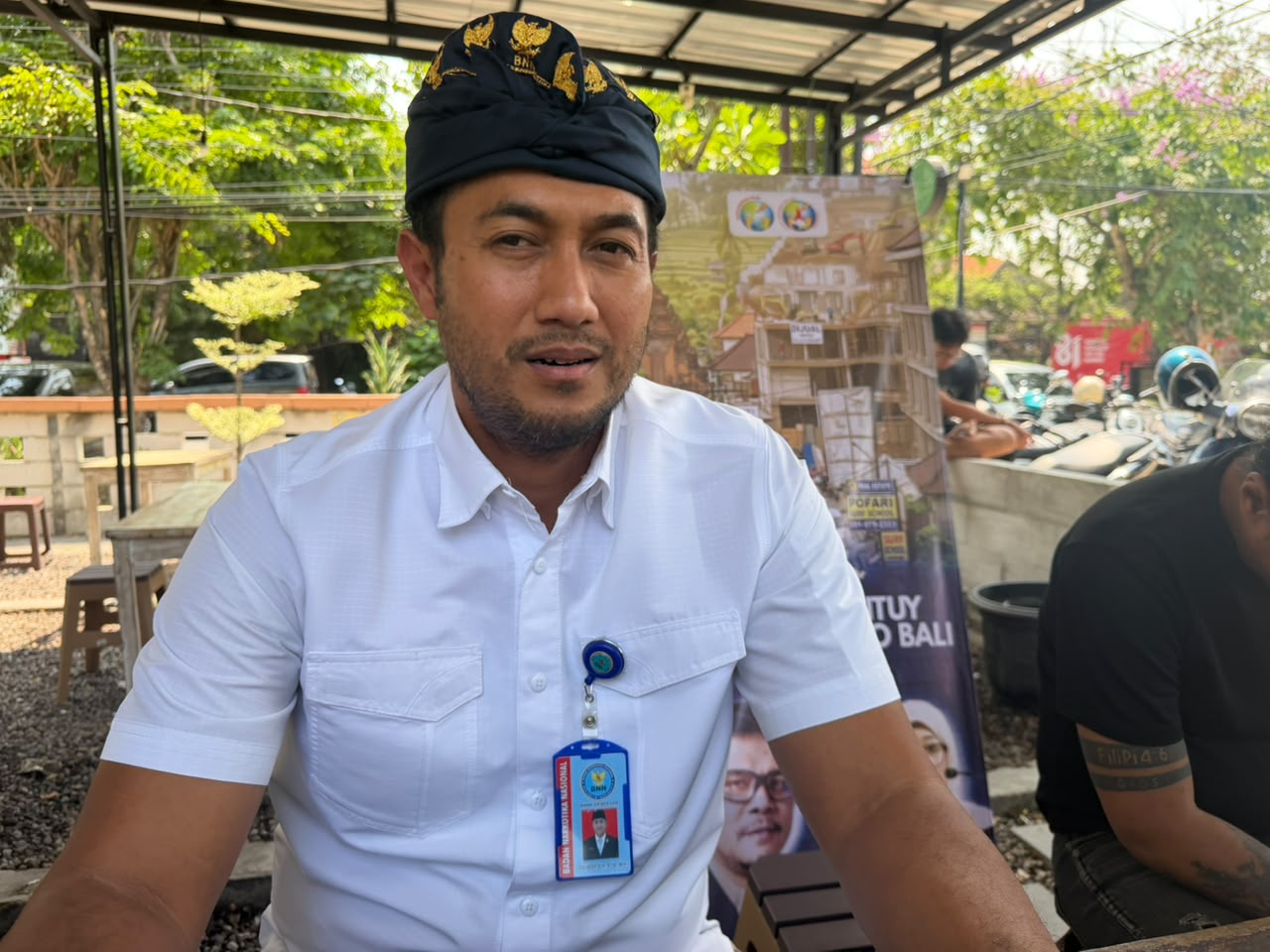
Head of the Denpasar City BNN, Commissioner Dr. Leo Dedy Defretes, S.H., S.I.K., M.H., said efforts to combat narcotics could not rely solely on arrests of dealers and traffickers. Prevention must be strengthened by building resilience among communities, particularly young people.
Leo made the statement during the monthly Ngopi Santuy discussion organized by the Bali chapter of the Online Journalists Association (IWO) in Renon, Denpasar, on Wednesday (September 30, 2026).
According to Leo, all 43 villages and urban villages in Denpasar are being encouraged to develop a community-based prevention ecosystem involving local government, residents, schools, families and community groups.
“We continue to encourage villages in Denpasar to become Bersinar villages. We prioritize areas considered potentially vulnerable or at risk, which means stakeholders and local communities need to be involved,” Leo said.
Narcotics Distribution Shifts to Vape Liquids
Leo said efforts to combat narcotics have become increasingly challenging as both the forms and methods of distribution continue to change.
While narcotics were previously more easily recognized in forms such as plants, powders or crystals, some substances can now be found in liquid form.
The development has raised concerns because such liquids can potentially be concealed or mixed into electronic cigarette cartridges.
“Because it is already in liquid form, it is very difficult to tell the difference. Is it a legally permitted liquid, or is it narcotics being smuggled into an electronic cigarette cartridge?” Leo said.
He said the development represents a new challenge for law enforcement and the public because drug distribution methods are adapting to technological and consumer trends.
Leo cited cannabis as an example, saying that although it is traditionally known as a plant, it can be extracted into liquid form. Other narcotic substances can also be mixed into electronic cigarette liquids, he said.
“This represents a transformation in illicit narcotics distribution. Both the modus operandi and the forms of the drugs have changed,” he said.
Etomidate Raises Concern
In addition to changes in the physical form of narcotics, the BNN is also monitoring the circulation of etomidate, which Leo described as a new psychoactive substance (NPS).
Leo said several etomidate cases have been uncovered in Bali. In cases handled by the BNN, the substance was reportedly priced at around Rp5 million.
“Etomidate is a new type of narcotic, or a new psychoactive substance. Its distribution is found among certain groups with financial means. In the cases we have uncovered, the price of etomidate was around Rp5 million,” he said.
Leo warned that children and teenagers could become potential victims if they lack sufficient knowledge and resilience to deal with developments in narcotics distribution in the digital era.
He said social media and illegal advertising could become channels through which young people are exposed to misleading information and encouraged to experiment.
“We do not want them, because of social media and technological developments, to lack sufficient knowledge and then become attracted or persuaded by disguised illegal advertisements,” he said.
Schools Strengthen Prevention Efforts
In response to changing drug distribution methods, the Denpasar City BNN is expanding its prevention programs into schools.
The agency is coordinating with the Education Office to promote the Integration of the Anti-Narcotics Curriculum (IKAN) across different levels of education, from elementary to senior high school.
Through the program, information about narcotics and their risks is incorporated into the learning process.
“The idea is to incorporate knowledge about narcotics into several subjects during the students’ learning process,” Leo said.
The BNN has also established Sobat Bersinar, a program involving students as anti-narcotics advocates within their schools and encouraging them to share information with their peers.
The program is intended to strengthen students’ ability to recognize changing drug distribution methods and resist negative influences both in their communities and in digital spaces.
BNN: The Drug War Is Not Only About Arrests
Leo stressed that combating narcotics cannot be left solely to law enforcement agencies.
Government institutions, schools, families, communities and various organizations must work together to establish a comprehensive prevention ecosystem, he said.
“The fight against drugs is for humanity. We are not only pursuing and arresting dealers, traffickers and offenders, but also preventing future generations from becoming victims,” Leo said.
He said children from kindergarten through elementary, junior high and senior high school require particular attention because they are highly exposed to information technology and social media.
“Drug distribution has transformed, both in terms of its modus operandi and the types of narcotics involved,” he said.
Families Urged to Strengthen Children’s Resilience
Leo also urged families not to leave the responsibility for narcotics prevention entirely to the BNN or schools.
Parents, he said, must become part of the early detection and prevention system.
“We have to build resilience in each individual,” he said.
According to Leo, the Sobat Bersinar and IKAN programs are part of the BNN’s efforts to narrow the space available for illicit drug distribution by establishing prevention networks involving government, schools, communities and various social groups.
“The BNN cannot work alone. We have to build these ecosystems together,” Leo said.
The Ngopi Santuy discussion was attended by IWO Bali Chairwoman Tri Widiyanti and members of the organization’s provincial executive board. Also present were Denpasar IWO branch chairman Bambang Supriyono, Denpasar IWO branch secretary Kande Putra, and Badung IWO branch chairman Rovinus Bou, along with other administrators and members.