DENPASAR, BALINEWS – The Indonesian Online Journalists Association (Ikatan Wartawan Online/IWO) of Bali Province continues to strengthen the role of the press as a bridge of information and a pillar of public oversight through its monthly discussion program, #NgopiSantuy.
In its latest session, IWO Bali invited Nyoman Suyasa, ST, Chairman of Commission III of the Bali Provincial Legislative Council (DPRD), to discuss developments in Bali’s tourism industry and infrastructure projects, including the progress of the planned Gilimanuk–Mengwi Toll Road.
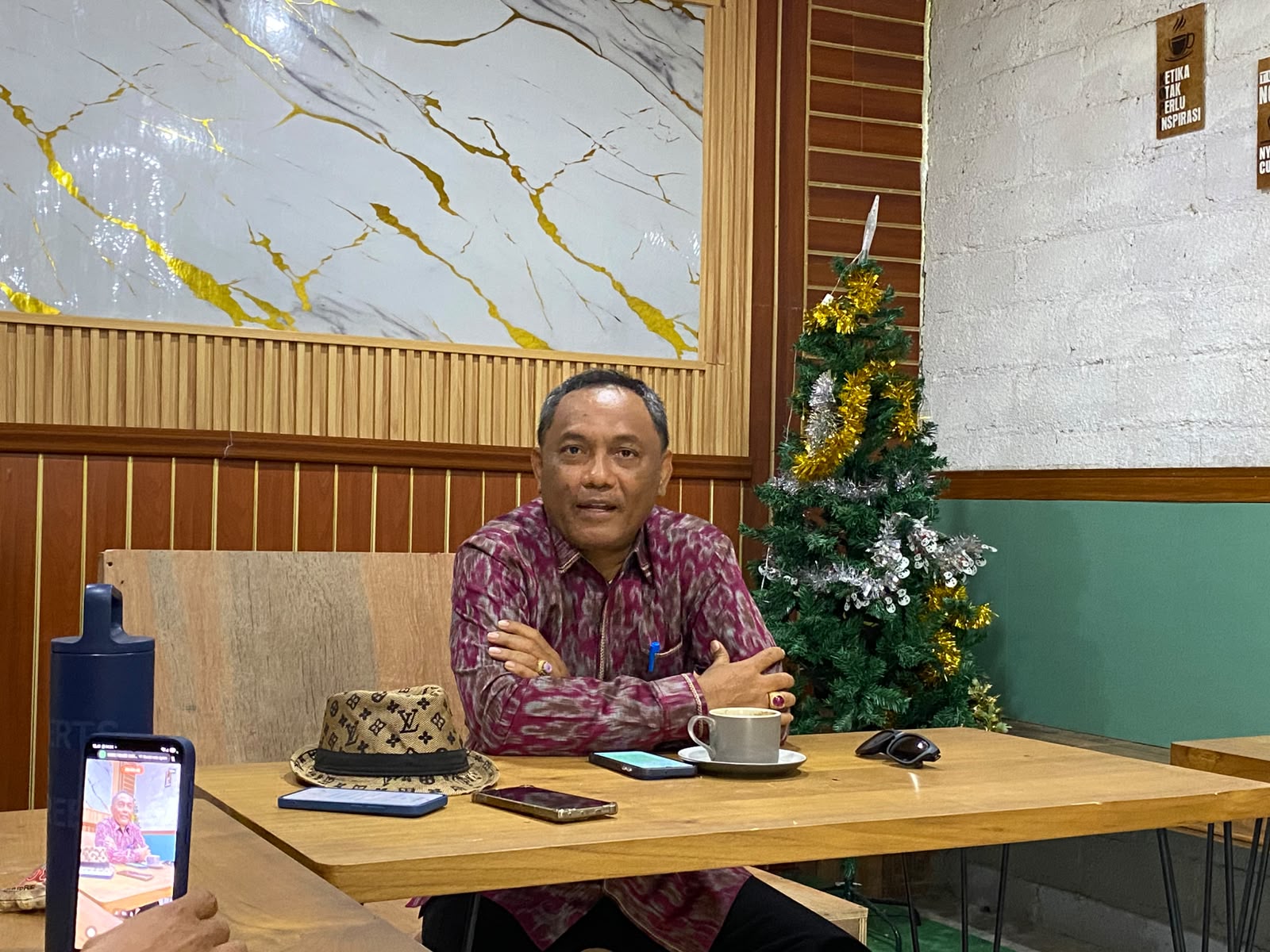
The discussion took place at a modest coffee shop in Denpasar on Friday, October 30, 2026. It was attended by IWO Bali Provincial Chairwoman Tri Widiyanti, representatives of IWO Denpasar City and Badung Regency, as well as members and administrators of the provincial organization.
Held in a relaxed yet engaging atmosphere, the discussion addressed several pressing issues affecting the people of Bali, including tourism development, traffic congestion, infrastructure construction, and the proposed Gilimanuk–Mengwi Toll Road project.
IWO Bali Chairwoman Tri Widiyanti said that #NgopiSantuy was designed as a regular monthly program featuring influential figures and policymakers in Bali as guest speakers.
Through this initiative, IWO Bali aims to establish an open communication platform between journalists and policymakers. The program also provides journalists with opportunities to raise critical questions and convey public concerns directly to decision-makers.
During the discussion, Suyasa, who also represents the Gerindra Party faction in the Bali Provincial DPRD, emphasized that tourism growth must be supported by adequate infrastructure and effective spatial planning.
One of the main topics discussed was the proposed Gilimanuk–Mengwi Toll Road.
Responding to journalists' questions about the project's progress, Suyasa said that, according to the latest information available to him, the project was still undergoing planning and land preparation.
He explained that land acquisition remained one of the biggest challenges, as the project involved numerous landowners and required complex negotiations.
"The consequence of constructing a new road is the need for available land. The land must be purchased, and because it belongs to many different residents, the negotiation process inevitably faces obstacles," Suyasa explained.
He also revealed that changes had been made to the proposed toll road alignment.
According to the information he had received, the original plan, which included a route from Gilimanuk toward Pekutatan in Jembrana Regency, had undergone adjustments, resulting in a different development scheme.
Meanwhile, the Gilimanuk–Pekutatan section was expected to be addressed through road improvements and widening. The toll road development was instead planned for the subsequent section connecting the Soka area to Mengwi.
Suyasa stressed that the infrastructure project was important for reducing traffic congestion, particularly along the Gilimanuk–Mengwi corridor, which has long been one of Bali's busiest transportation routes.
Under certain conditions, travel along the corridor can take four hours or even longer.
The proposed toll road is expected to shorten travel times, reduce congestion, improve road safety, and provide greater convenience for both local residents and tourists.
The discussion also highlighted the importance of developing public transportation systems in Bali's tourism destinations.
Suyasa noted that supporting facilities, including adequate parking areas, should also be provided to encourage residents and tourists to shift from private vehicles to public transportation.
As Chairman of Commission III of the Bali Provincial DPRD, which oversees infrastructure development, public works, urban planning, transportation, environmental affairs, public housing, and other strategic sectors, Suyasa emphasized that infrastructure development must be carefully planned and aligned with the needs of the community.
Through the #NgopiSantuy program, IWO Bali hopes to encourage more open discussions about development challenges across the Island of the Gods while promoting practical solutions that can be followed up by the government and other relevant stakeholders.
The initiative reflects IWO Bali's commitment to producing journalism that goes beyond simply delivering information. It also seeks to strengthen public oversight of government policies by raising questions, offering constructive criticism, and conveying the aspirations of the community.
With a simple concept centered around a cup of Balinese coffee, #NgopiSantuy is expected to become a consistent, critical, and productive discussion platform for journalists, public figures, and policymakers in Bali.
By bringing the press and policymakers together in an informal setting, IWO Bali aims to ensure that issues affecting the public receive greater attention and contribute to more transparent and responsive governance.