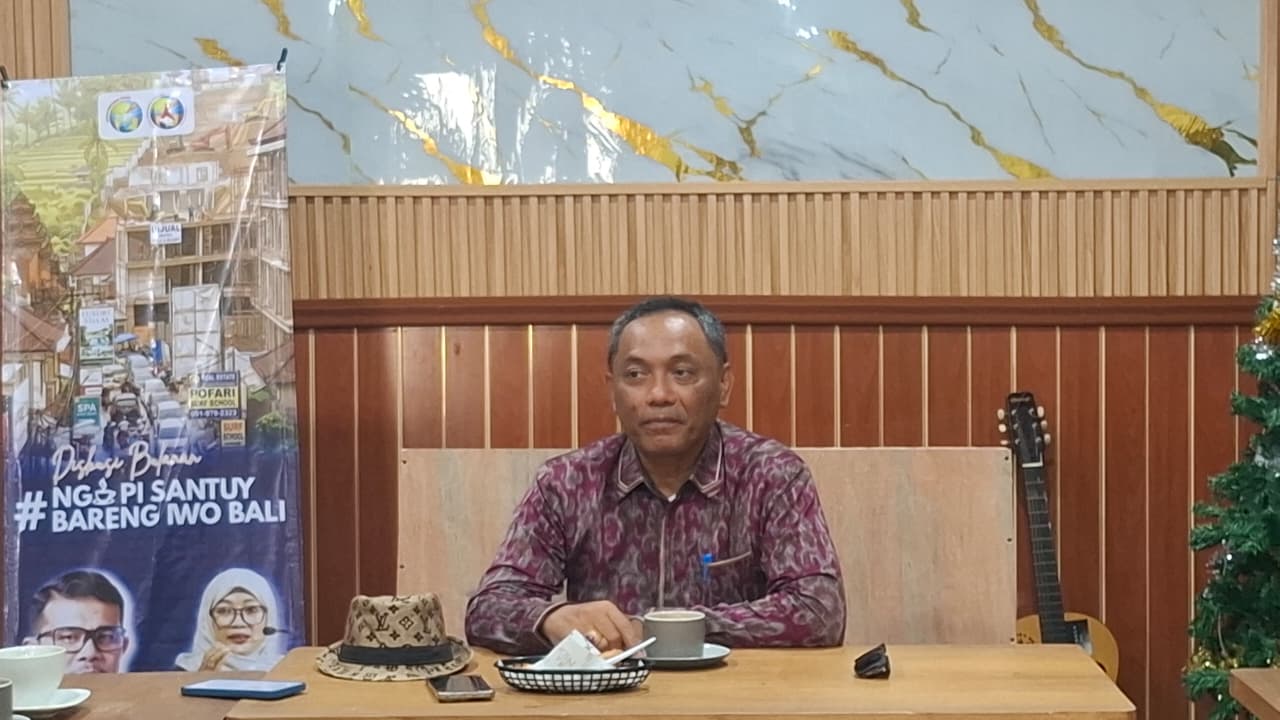
DENPASAR, BALINEWS – The Indonesian Online Journalists Association (Ikatan Wartawan Online/IWO) of Bali Province has once again provided a platform for public discussion through its monthly program, #NgopiSantuy. This month's discussion focused on the theme "Public Transportation in Bali: Transportation and Policy", featuring Nyoman Suyasa, ST, Chairman of Commission III of the Bali Provincial Legislative Council (DPRD), as the guest speaker.
The event was held at a modest coffee shop in Denpasar on Friday, October 30, 2026. It was attended by IWO Bali Provincial Chairwoman Tri Widiyanti, representatives of IWO Denpasar City and Badung Regency, as well as administrators and members of IWO Bali.
The discussion took place in a relaxed yet serious atmosphere, addressing several transportation issues of public concern, particularly traffic congestion, public transportation development, integrated mass transit systems, and potential policies to restrict private vehicle use.
IWO Bali Chairwoman Tri Widiyanti explained that #NgopiSantuy is a monthly discussion program designed to bring influential figures and policymakers in Bali into direct dialogue with journalists.
Through this forum, IWO Bali aims to establish open communication between members of the press and policymakers while providing an opportunity to discuss current issues affecting the community.
During the discussion, Nyoman Suyasa emphasized the importance of developing an integrated mass transportation system as one of the key solutions to reducing traffic congestion in Bali.
He explained that public transportation development should involve more than simply providing buses or other public transport vehicles. It must also ensure seamless connections between different modes of transportation, allowing passengers to continue their journeys conveniently.
"Mass transportation is extremely important, and it must be integrated. When someone takes a bus, there should be another connected mode of transportation available to take them to their next destination. That is what an integrated mass transportation system means," Suyasa said.
He believes that implementing such a system in Bali is entirely possible, provided it is supported by strong political commitment and proper planning.
One area that particularly requires improved public transportation connectivity is the route from I Gusti Ngurah Rai International Airport to major tourism destinations such as Nusa Dua, Kuta, and Legian.
According to Suyasa, these areas experience significant tourist activity and therefore require reliable public transportation services to reduce dependence on private vehicles.
The discussion also addressed Metro Dewata, one of Bali's public transportation services.
Based on his observations and the information available to him, Suyasa said that passenger numbers on Metro Dewata buses had increased since the service resumed operations in 2025, although the growth had not yet been particularly significant.
He also highlighted improvements in operational budget efficiency compared with the previous financing arrangements.
Nevertheless, he stressed that further development of public transportation would require improvements in service quality to make it more attractive and accessible to the public.
Participants also raised questions about the possibility of developing tram-based or subway transportation systems in Bali, including the challenges of constructing routes that might intersect with sacred areas and religious worship sites.
In response, Suyasa stressed that technological advancement and infrastructure development must not come at the expense of Balinese customs, cultural traditions, and religious values.
He emphasized that transportation planning must carefully consider the presence of sacred sites, particularly locations that hold significant spiritual importance for Bali's Hindu community.
"Modern developments and technological advancements do not mean that Bali's customs and cultural traditions must disappear. Solutions must certainly be found, including determining transportation routes that do not conflict with sacred sites," he explained.
The discussion also explored several potential transportation policies, including restrictions on private vehicle use, the adoption of electric vehicles, and regulations governing the age of vehicles allowed to operate on public roads.
Several participants argued that strengthening public transportation must go hand in hand with policies to control the growing number of private vehicles, as traffic congestion continues to pose a major challenge for Bali as an international tourism destination.
However, implementing such policies would require comprehensive assessments that take into account Bali's geographical characteristics, residents' mobility needs, and the readiness of public transportation infrastructure and supporting facilities.
Through #NgopiSantuy, IWO Bali aims to ensure that issues affecting the community have a platform for open discussion and receive appropriate attention from policymakers.
By inviting speakers from various backgrounds each month, the program is expected to become a platform for communication, public aspirations, and constructive dialogue while strengthening the role of the press in overseeing public policies in Bali.
The simple gathering, accompanied by a cup of Balinese coffee, reflects IWO Bali's commitment to maintaining an open, critical, and sustainable dialogue between journalists, government officials, and the wider community.
Ultimately, the initiative seeks to ensure that Bali's transportation challenges and future development remain part of an ongoing public conversation, encouraging policies that balance mobility, sustainability, tourism growth, and the preservation of local cultural values.