DENPASAR, BALINEWS – Public complaints over the ongoing improvement project on Gajah Mada Street in Denpasar became a major topic of discussion at the monthly gathering of the Indonesian Online Journalists Association (IWO) Bali Province, held under the theme #NgopiSantuy on Friday (October 30, 2026).
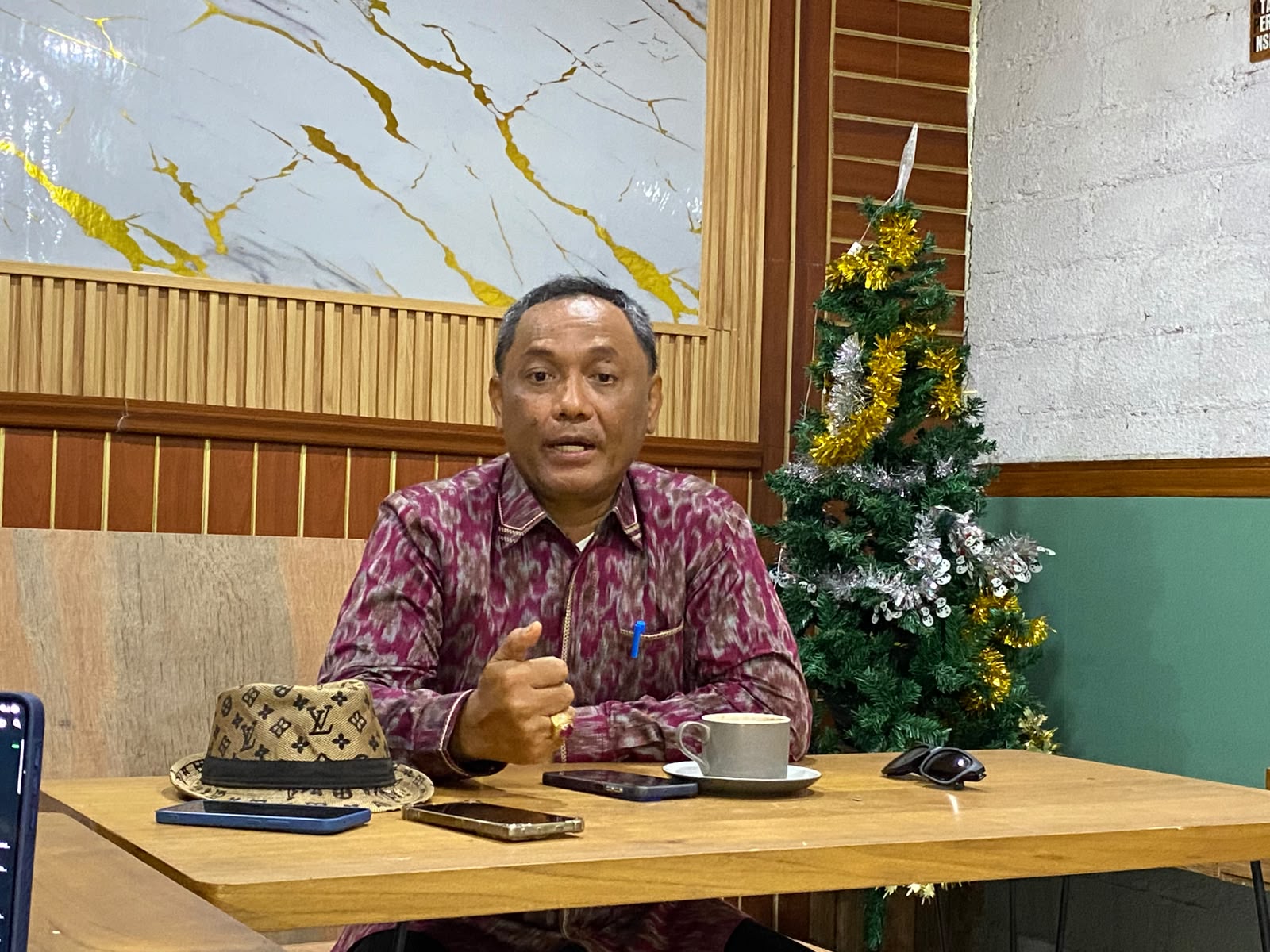
During the discussion, Nyoman Suyasa, ST, Chairperson of Commission III of the Bali Provincial Legislative Council (DPRD Bali), highlighted the importance of coordination among government agencies to ensure that infrastructure projects do not create additional problems for the public.
Residents have raised several concerns, particularly regarding traffic congestion caused by the partial closure of the road for concrete work and paving installation. The reduced road capacity has resulted in long queues of vehicles, especially along the route from Sutomo Street toward Gajah Mada Street during morning and evening rush hours.
In addition to traffic congestion, residents have expressed concerns over the slow progress of the paving installation. The use of paving blocks considered relatively small has also drawn public attention.
Restricted road access has further affected local economic activities, as customers and shoppers are finding it increasingly difficult to reach businesses and shops along the Gajah Mada commercial district.
Another issue raised by the public concerns the road elevation in relation to the surrounding area near the Catur Muka Statue.
Responding to these complaints, Suyasa emphasized that infrastructure improvements must be supported by thorough planning, including clear identification of the authority responsible for managing the road before any project is implemented.
He explained that the government must first determine whether a particular road falls under the authority of the city, provincial, or central government. This is essential to ensure that supervision and budget allocation are properly targeted.
“This should serve as a form of evaluation and a lesson for the future, so that the Public Works Department can carry out its supervisory responsibilities effectively and identify which roads are genuinely damaged and need budget allocations. We must not allow roads that are already in good condition to be dismantled again,” Suyasa said during the discussion.
He also specifically addressed the lack of coordination between the Public Works Department (PU), the regional drinking water company (PDAM), and other agencies involved in infrastructure development.
According to Suyasa, a recurring problem occurs when roads that have already been repaired or resurfaced are excavated again to accommodate water pipes or cable networks that were not properly coordinated beforehand.
He argued that such situations demonstrate the need to improve planning systems and inter-agency communication before construction work begins.
“Why isn't everything planned properly? Before a road is resurfaced, there should be prior coordination with PDAM and other relevant parties. I am also frustrated when a road that has already been properly repaired is subsequently torn up again,” he stated.
Suyasa added that all infrastructure requirements, including water pipelines and cable installations, should be incorporated into the initial project planning.
This would allow construction activities to be carried out in a systematic sequence, preventing the unnecessary dismantling of infrastructure that has already been completed.
He expressed hope that coordination mechanisms among government agencies would be strengthened and streamlined in the future. Road construction, he said, should follow an integrated process, beginning with planning and excavation, followed by utility installation, road paving, and final completion.
The discussion took place in a relaxed yet constructive atmosphere at a modest coffee shop in Denpasar. The event was led by Tri Widiyanti, Chairperson of IWO Bali Province, with Nyoman Suyasa serving as the main speaker.
Tri Widiyanti explained that the #NgopiSantuy program is planned to take place monthly, featuring influential figures from across Bali.
The forum serves as a platform for journalists to discuss current issues while conveying public concerns and aspirations directly to policymakers.
Also attending the gathering were the Chairperson of IWO Denpasar City and members of the local board, the Chairperson of IWO Badung Regency and representatives, as well as executives and members of IWO Bali Province.
Through this discussion, IWO Bali hopes that the issues surrounding the Gajah Mada Street improvement project, along with other infrastructure-related concerns, will receive serious attention from the government.
Ultimately, infrastructure development should not focus solely on completing construction projects. It must also prioritize public convenience, smooth traffic flow, accessibility, and the economic interests of local communities.