
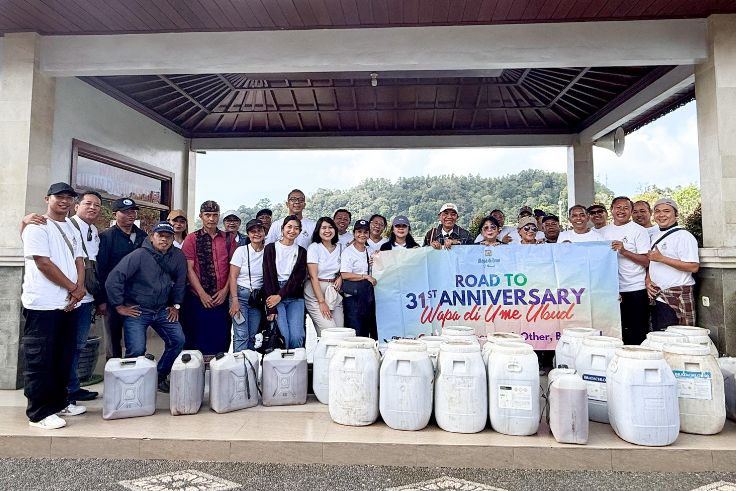
TABANAN, BALINEWS.ID – In celebration of its 31st anniversary, Wapa di Ume Ubud reinforced its environmental commitment by releasing 1,000 liters, or approximately one ton, of eco enzyme into the waters surrounding the iconic Ulun Danu Beratan Temple on Friday 13th of March 2026.
The ecological initiative forms part of the resort’s anniversary celebration themed “Bianglala – Stay Colourful,” symbolizing harmony, diversity, and a vibrant relationship between people and nature.
The program reflects the resort’s ongoing dedication to sustainability and marks the second consecutive year the hospitality group has organized a large-scale eco enzyme distribution. Beyond being a symbolic anniversary activity, the initiative aims to contribute directly to improving water quality and supporting the natural ecosystem around Lake Beratan.
The eco enzyme used in the program was produced through an internal sustainability effort initiated by the resort’s management team. The idea originated from a simple yet pressing concern: how to manage organic fruit waste generated daily by the hotel’s kitchens and bars.
Instead of allowing the waste to add to Bali’s ongoing environmental challenges, the team began exploring ways to convert organic leftovers into something beneficial. Through a natural fermentation process, fruit waste is mixed with molasses or natural sugar and fermented for approximately three to four months.
The fermentation produces eco enzyme, a natural liquid widely recognized for its environmentally friendly properties. When introduced into water systems, eco enzyme can help improve water quality, encourage the growth of beneficial microorganisms, and reduce harmful substances in aquatic environments.
Over the course of about six months, the sustainability team at Wapa di Wapa di Ume Ubud releases 1,000 liters of eco enzyme into the waters of Ulun Danu Beratan Temple as part of its 31st anniversary environmental initiative.Ume Ubud carefully collected and processed fruit waste from its culinary operations. The initiative also involved contributions from its sister property, Wapa di Ume Sidemen.
From these efforts, the resorts successfully produced around 1,000 liters of eco enzyme derived entirely from organic waste generated within their restaurants and bars.
Managing Director I Gede Paskara Karilo explained that the initiative was inspired by growing concerns over waste management issues across Bali.
“Waste management has recently become an important topic of discussion in Bali. As part of the tourism industry, we believe it is our responsibility to contribute solutions, even through small but consistent actions,” he said.
According to him, the eco enzyme production process begins with collecting unused fruit from the kitchen and bar operations.
“Many fruits used in our kitchens and bars eventually become waste. Instead of discarding them, we ferment the fruit with molasses for several months to produce eco enzyme. In a year, we can process more than 2,000 liters of fruit waste from the restaurants and bars of both Wapa di Ume Ubud and Sidemen,” he added.
The initiative also embodies the values of Tri Hita Karana, a Balinese philosophy emphasizing harmony between humans, nature, and the spiritual realm. Within this concept, the relationship between humans and the environment or known as Palemahan, encourages responsible actions to protect and preserve nature.
By releasing eco enzyme into the waters around Ulun Danu Beratan Temple, the resort hopes to help maintain ecological balance at one of Bali’s most important natural and cultural landmarks. The temple and surrounding lake are not only a major tourism destination but also hold deep spiritual significance for the Balinese community.
As the resort celebrates more than three decades of hospitality, Wapa di Ume Ubud reaffirmed its commitment to integrating sustainability into its long-term vision in order to support a cleaner, greener, and more harmonious Bali for future generations. (*)