DENPASAR, BALINEWS — Investment realization in Bali reached Rp23.77 trillion in the third quarter of 2026, nearly half of the province’s Rp47.9 trillion target. However, investment remains heavily concentrated in southern Bali, which accounted for around 92-93 percent of total investment.
The uneven distribution has become one of the key challenges facing the Bali provincial government amid strong investment inflows, particularly foreign investment.
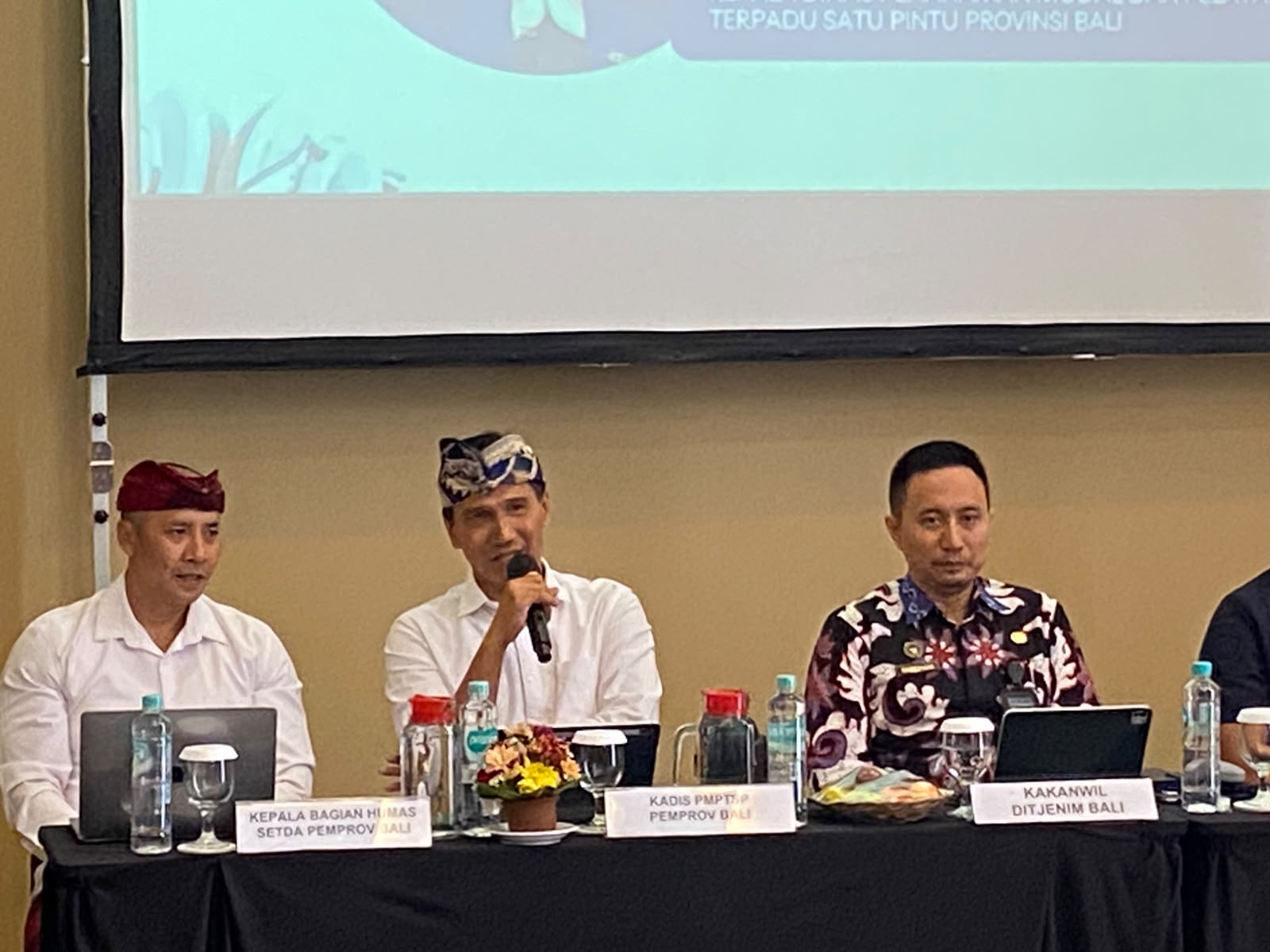
Head of the Bali Investment and One-Stop Integrated Services Agency (DPMPTSP), Dr. I Ketut Sukra Negara, said foreign direct investment (FDI) accounted for approximately Rp14.9 trillion of the Rp23.77 trillion total investment recorded through the third quarter of 2026.
“Investment of more than Rp23 trillion is still concentrated in certain areas. That is our biggest challenge,” Sukra Negara said during a media gathering organized by the Denpasar Immigration Detention Center on Thursday (Oct. 1, 2026).
Data presented by the agency showed that the concentration of investment in southern Bali has increased in recent years. In 2024, southern Bali accounted for approximately 87 percent of investment, compared with 13 percent in other parts of the island.
The gap widened in 2025, when southern Bali accounted for around 93 percent, compared with 7 percent elsewhere. In 2026, southern Bali accounted for approximately 92 percent, while other regions received around 8 percent.
Badung Records Rp14 Trillion
Badung Regency recorded the highest investment realization in Bali, at approximately Rp14 trillion. Denpasar also remained among the areas with a high concentration of investment.
Outside southern Bali, Buleleng recorded relatively high investment realization at around Rp699 billion, followed by Karangasem at approximately Rp549 billion.
Jembrana, meanwhile, recorded only around Rp139 million.
“Compare Badung, which reached Rp14 trillion, with Jembrana, which recorded only around Rp139 million. The gap is enormous,” Sukra Negara said.
He said investors tended to favor areas with established economic centers, infrastructure, facilities and markets.
Services Sector Dominates Investment
Investment in Bali continues to be dominated by the tertiary, or services, sector.
Over the past four years, hotels and restaurants accounted for approximately Rp9 trillion in investment. Transportation, warehousing and telecommunications followed with around Rp8 trillion, while housing, industrial estates and office development accounted for approximately Rp7 trillion.
Other services contributed around Rp4 trillion, while trade and vehicle repair accounted for approximately Rp1 trillion.
In 2025, the tertiary sector accounted for around 97.4 percent of Bali’s investment structure. The primary sector, including agriculture, accounted for approximately 0.9 percent, while the secondary sector accounted for around 2 percent.
For foreign investment, the five largest source countries cited by the Bali DPMPTSP were France, Australia, Russia, Singapore and Malaysia.
Bali Government Flags Alleged Misuse of Business Classifications
Amid the significant inflow of foreign investment, the Bali provincial government has also raised concerns about several practices involving foreign-invested businesses.
One issue is the alleged misuse of the Indonesian Standard Industrial Classification (KBLI). Sukra Negara said KBLI 68111, covering real estate owned or leased, is among the classifications frequently used.
According to him, problems arise when properties developed under that business classification are subsequently used for activities that differ from the permitted business.
“The permit uses KBLI 68111, but in practice it is being used for different activities,” he said.
The provincial government has also raised concerns over foreign investment entering micro, small and medium-sized enterprises (MSMEs), including motorcycle rentals, salons and photography businesses.
Regarding motorcycle rentals, Sukra Negara said no more than five companies officially hold foreign investment permits for the business. However, based on government monitoring, the number of motorcycle rental businesses operating in Bali could reach approximately 4,900.
He also said there are salons being operated by foreign nationals.
Around 100 Businesses in Melasti Area Reportedly Unlicensed
Licensing and administrative compliance have also become a focus of the Bali DPMPTSP.
Sukra Negara said foreign investment is subject to a minimum investment requirement of Rp10 billion. However, government monitoring has identified issues involving capital requirements, licensing, environmental approvals and Building Approvals (PBG).
In the Melasti Beach area, approximately 100 businesses were identified by the DPMPTSP as operating without permits, according to Sukra Negara.
He said around 80 percent of the foreign-invested businesses identified in the monitoring were linked to Chinese nationals.
Sukra Negara also said some businesses were operating on state-owned land or land leased from local residents.
Nominee Arrangements and Multiple Business Registrations Under Scrutiny
The Bali government has also raised concerns about so-called nominee arrangements, in which Indonesian citizens are allegedly used as shareholders or owners on behalf of foreign nationals.
The DPMPTSP has also identified indications of companies that possess Business Identification Numbers (NIBs) administratively but do not conduct actual business operations.
Sukra Negara cited one location that had approximately 28 NIBs registered to different companies. Several of those companies were registered at the same address.
According to him, the companies were allegedly established for administrative and legal purposes, while their actual activities were directed toward MSME sectors, including motorcycle rentals.
Bali Tightens Several Foreign Investment Business Classifications
In response to the findings, the Bali provincial government has tightened controls on KBLI classifications and the Online Single Submission (OSS) licensing system.
Several foreign-investment business activities, including motorcycle rentals and salons, have subsequently been restricted or blocked. The policy has been in effect since May 13, 2026.
The restrictions also relate to compliance with spatial planning regulations. Sukra Negara said some business operators had already purchased land and constructed facilities, only to discover during the licensing process that their properties were located in protected areas, including areas designated as Protected Agricultural Land (LSD), or other zones where such activities are not permitted.
He stressed that investors should verify spatial planning and licensing requirements before purchasing land or starting construction.
The provincial government has also received requests for exemptions for certain business operators that had already invested and were considered major or well-known businesses.
Sukra Negara said granting exemptions could create unequal treatment in the licensing process.
“If exemptions are granted, it would certainly be unfair because different treatment would emerge,” he said.
As a result, business classifications that have been restricted will continue to be subject to applicable spatial planning and licensing regulations.
The Bali provincial government now faces the challenge of ensuring that investment growth is not concentrated solely in southern Bali, while also taking into account economic distribution, environmental carrying capacity and opportunities for local communities and businesses.