DENPASAR, BALINEWS – Nyoman Suyasa, Chairman of Commission III of the Bali Provincial Legislative Council (DPRD Bali), has called for a policy requiring state civil servants (ASN) in Bali to use public transportation when commuting to work as part of efforts to reduce traffic congestion and vehicle emissions across the island.
He also announced that Bali’s Regional Regulation (Perda) on Special Rental Transportation (Angkutan Sewa Khusus/ASK) has received its registration number from the Ministry of Home Affairs (Kemendagri) and is now awaiting the final enactment process.
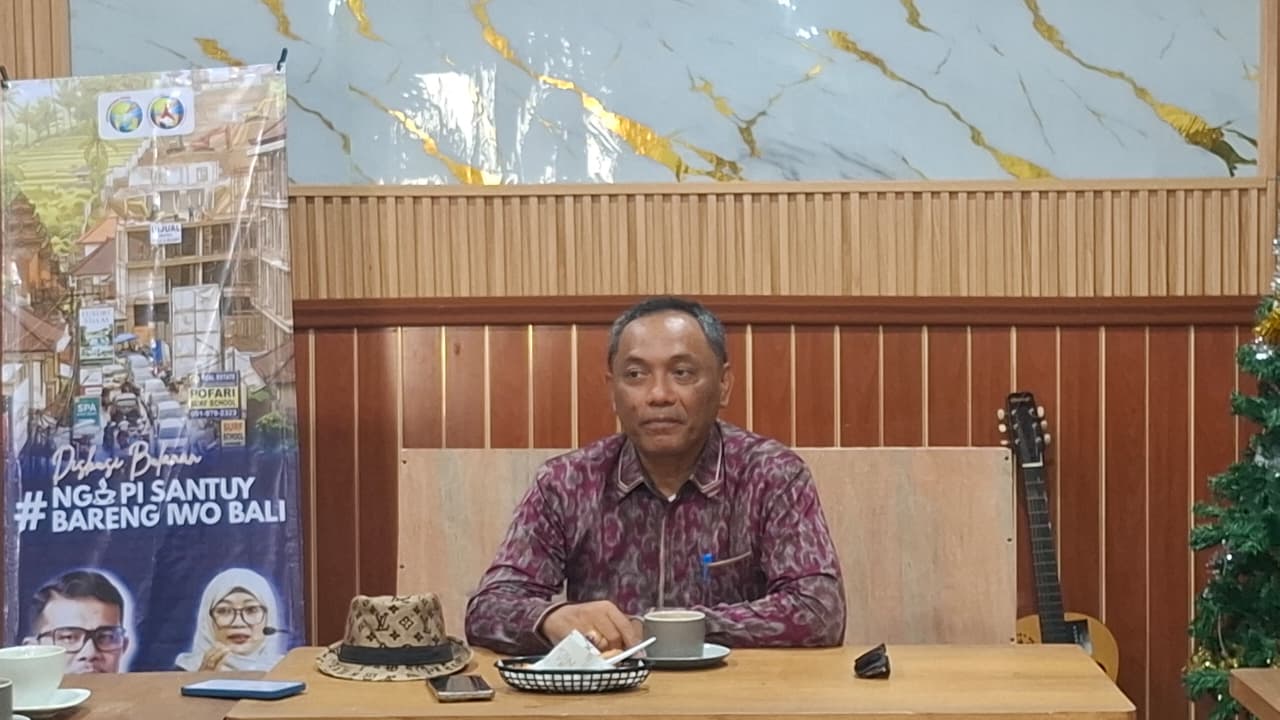
Suyasa made the remarks during the monthly #NgopiSantuy discussion hosted by the Bali Provincial chapter of the Online Journalists Association (IWO) in Denpasar on Friday (October 30).
The discussion, chaired by IWO Bali Chairperson Tri Widiyanti, focused on two major issues: public transportation policies for civil servants in Bali and the proposed regional regulation governing special rental transportation services.
Speaking at the event, Suyasa expressed his support for making public transportation mandatory for civil servants commuting to their offices. He emphasized that the policy should be implemented consistently so that government institutions can set an example for the public by reducing reliance on private vehicles.
He added that members of the Bali Provincial Legislative Council should also lead by example by using public transportation.
Suyasa acknowledged that the Bali Governor had previously issued a circular encouraging civil servants to use public transportation and reduce vehicle emissions. However, he noted that stronger follow-up measures were still needed to ensure effective implementation.
He said the concerns and recommendations raised during the discussion would be brought to the attention of Commission III and subsequently conveyed to the Governor and relevant regional government agencies.
Regarding the Special Rental Transportation Regional Regulation, Suyasa explained that the draft had undergone three rounds of discussions and revisions since May 2025.
Following a series of facilitation processes and substantive revisions, the regulation received its registration number from the Ministry of Home Affairs approximately five days before the discussion took place.
One of the key changes involved revising the regulatory terminology from "tourism special rental transportation" to "special rental transportation." According to Suyasa, the adjustment was necessary to ensure that the regulation complies with national government requirements, including the provisions of Minister of Transportation Regulation No. 118.
He expressed hope that the regulation would provide legal certainty for tourism transportation business operators and drivers while helping address various transportation-related issues on the ground.
Suyasa also acknowledged the contributions of tourism driver associations and other community groups that had actively supported and monitored the regulation's development, including discussions at the ministerial level in Jakarta.
However, he stressed that the success of a regional regulation depends not only on its drafting and approval but also on its effective implementation and supervision.
During the discussion, Suyasa also revealed that Commission III was planning to review possible regulations governing vehicles registered outside Bali that enter and operate on the island.
The proposed study will examine potential vehicle regulations and possible tax revenue-sharing arrangements between the regions where the vehicles are registered and Bali.
The initiative is expected to involve coordination with the One-Stop Integrated Administration Services (Samsat) and the Bali Regional Revenue Agency (Bapenda).
According to Suyasa, a carefully designed regulatory framework is needed to ensure that vehicles from outside the province contribute positively to Bali without creating additional transportation or administrative problems.
The #NgopiSantuy discussion is a regular monthly program organized by IWO Bali, bringing together influential figures and stakeholders to discuss current issues affecting the island.
The event was attended by the Chairperson of IWO Denpasar and members of the city chapter, representatives of IWO Badung, as well as board members and other members of the Bali Provincial IWO organization.
Through the program, IWO Bali aims to create an open platform for dialogue between journalists and policymakers, allowing public concerns and community aspirations to be communicated through the media and brought to the attention of relevant authorities.