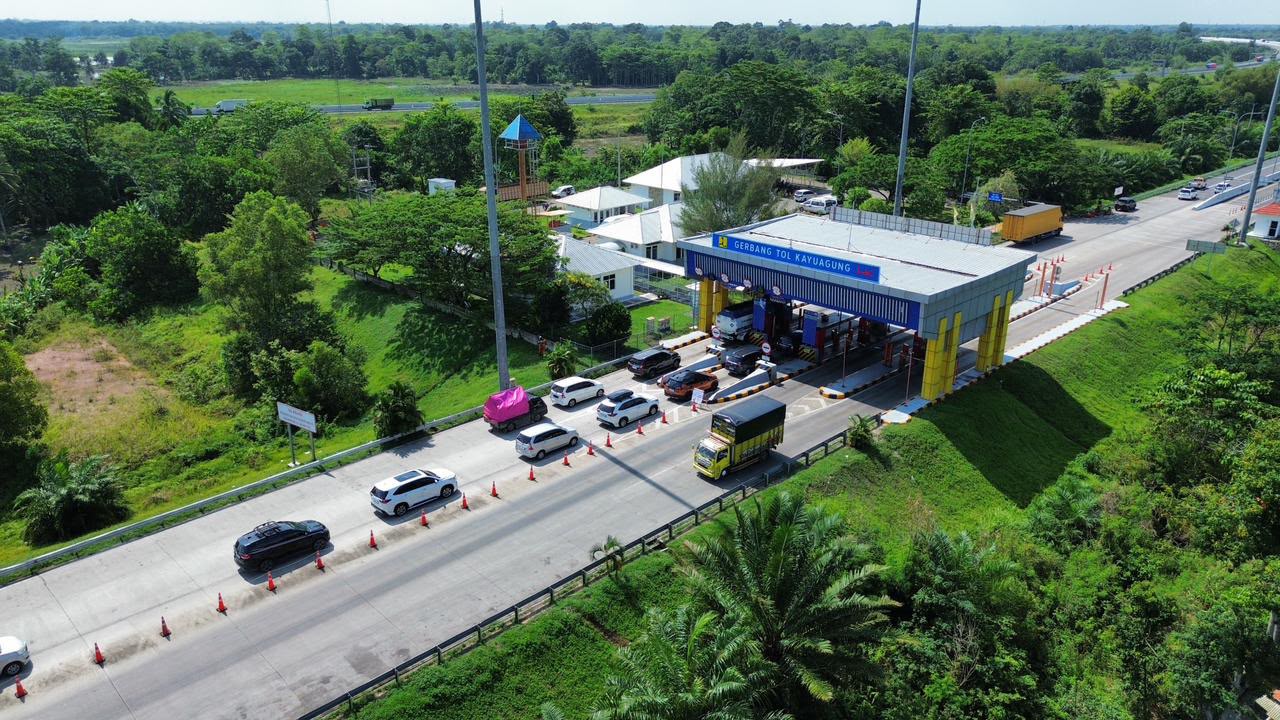
RIAU, BALINEWS – Indonesia’s House of Representatives (DPR RI) State Finance Accountability Body (BAKN) reviewed the governance and effectiveness of the Trans-Sumatra Toll Road (JTTS) development during a working visit to Pekanbaru, Riau, on Friday (Oct. 2, 2026).
The meeting brought together BAKN lawmakers and representatives from the Ministry of Public Works, the Ministry of National Development Planning (Bappenas), the Ministry of State-Owned Enterprises, Danantara Asset Management, and several toll-road operators.
PT Hutama Karya (Persero), the state-owned company tasked with developing the JTTS network, presented an update on the project’s progress, governance, financing schemes and economic benefits for communities across Sumatra.
Hutama Karya reported that as of August 2026, approximately 1,160 kilometers of the JTTS network had been constructed, with around 982 kilometers already in operation.
The company said construction is being carried out in stages based on project readiness and funding availability, while taking into account connectivity needs and the benefits each corridor can provide for public mobility and the distribution of goods.
Hutama Karya also outlined efforts to strengthen project governance through improvements to feasibility-study procedures, risk assessments and construction oversight.
The measures are intended to ensure that projects are better prepared and aligned with development priorities, investment requirements and funding readiness.
The company also presented plans for the development of the Jambi–Rengat and Pekanbaru–Padang corridors. Their development will proceed according to project readiness and the applicable business and financing schemes.
To support the long-term sustainability of JTTS development, Hutama Karya is preparing alternative financing mechanisms, including performance-based periodic payments and asset recycling, which involves leveraging the value of operational assets to support subsequent investments.
Hutama Karya Director of Operations III Iwan Hermawan said the JTTS development was not merely about building toll roads, but also about strengthening connectivity and delivering tangible benefits to communities.
“We are carrying out the JTTS assignment while maintaining good governance, infrastructure quality and development sustainability. For us, every connected section brings hope that people can reach their families more easily, businesses can access wider markets, and road users can enjoy safer and more comfortable journeys,” Iwan said.
BAKN Chairman Andreas Eddy Susetyo emphasized the importance of measuring infrastructure effectiveness based on tangible benefits.
“This review aims to ensure that JTTS development is supported by sound planning and accountable resource management. Its effectiveness needs to be assessed through service quality and its contribution to transportation and economic activities,” Andreas said.
BAKN member Herman Khaeron, meanwhile, highlighted the importance of integrating toll roads with economic centers along the JTTS corridors.
He said toll-road access should be connected to industrial areas, production centers and logistics hubs so that the infrastructure can generate broader economic benefits.
“Toll-road access needs to be connected to industrial areas, production centers and logistics hubs. This will enable businesses to use improved transportation access to streamline distribution, expand markets and create economic opportunities for local communities,” Herman said.
Through the working visit, Hutama Karya said it would continue strengthening coordination with the government, parliament, ministries and relevant agencies to ensure the JTTS development remains aligned with national infrastructure priorities.
The expansion of the toll-road network across Sumatra is expected to improve mobility and logistics while expanding market access and supporting economic growth in regions along the corridor.