BADUNG, BALINEWS – Indonesia's government-backed loan programs had disbursed IDR 294.6 trillion to 4.24 million borrowers as of October 27, 2026, surpassing the full-year 2025 total of IDR 275.8 trillion, with more than two months remaining in the current year.
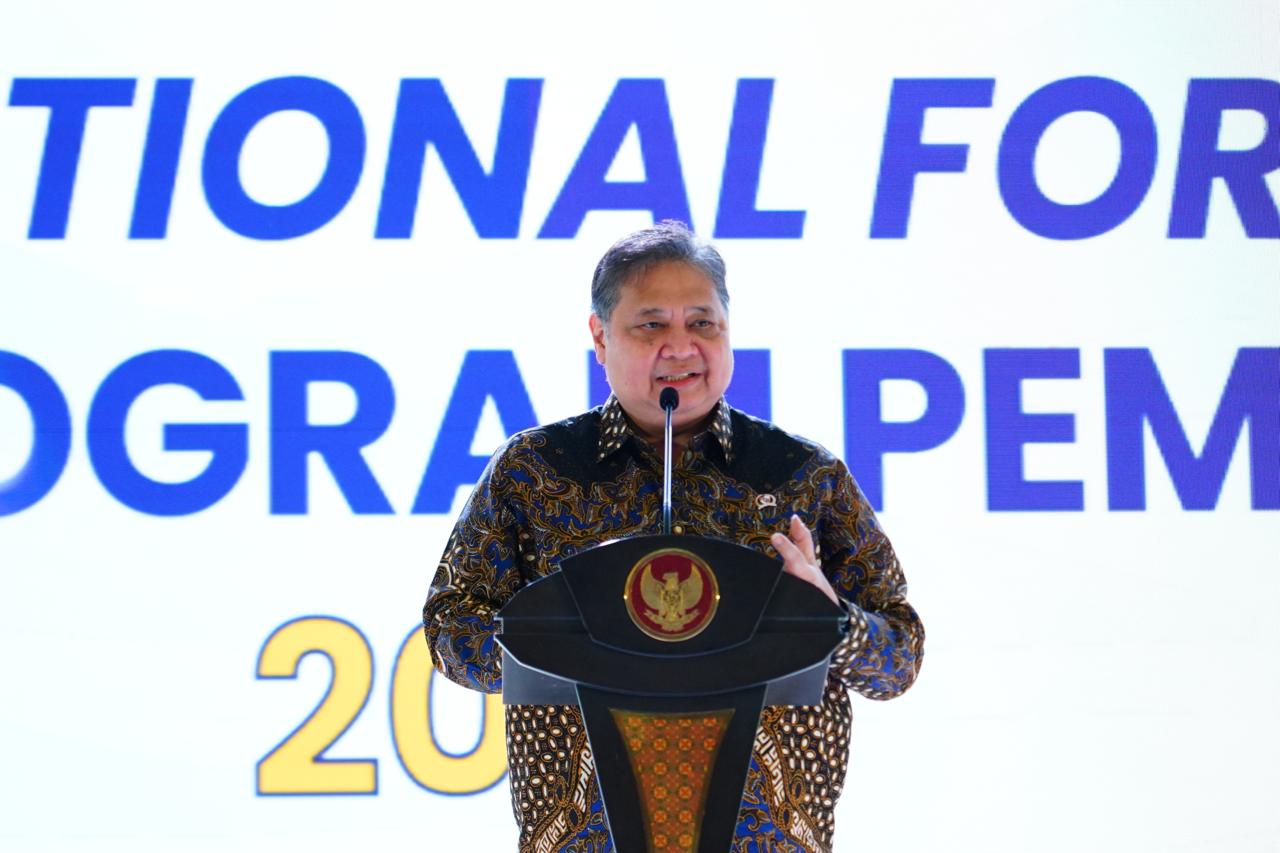
The achievement was announced by Coordinating Minister for Economic Affairs Airlangga Hartarto during his keynote speech at the 2026 International Forum on Government Credit Programs in Nusa Dua, Bali, on Thursday (October 29, 2026).
Airlangga emphasized that the success of government-backed credit programs should not be measured solely by the amount of financing distributed, but also by their impact on business growth, job creation, productivity, and household welfare.
"Government credit programs are not merely subsidized loans. They are instruments to stimulate economic growth, create jobs, and increase national productivity. Their success should be measured by growing businesses, jobs created, and improvements in family welfare," Airlangga said.
He noted that these achievements demonstrated the role of government financing in supporting Indonesia's economy amid a global economic slowdown.
Indonesia's economy grew by 5.45 percent in the first half of 2026. Micro, small, and medium enterprises (MSMEs) remained one of the key drivers of this growth, supported by expanded access to financing through the People's Business Credit program, known as Kredit Usaha Rakyat (KUR).
KUR's share of total MSME lending has now reached 30.6 percent, more than doubling from 14.7 percent in 2019.
Throughout 2026, KUR had reached 4.12 million borrowers, with total disbursements amounting to IDR 265.9 trillion, equivalent to 90.1 percent of this year's target.
Airlangga explained that Indonesia's government credit programs have undergone significant policy developments since their introduction in 2007 through the KUR credit guarantee scheme.
In 2015, the program was transformed into an interest subsidy scheme, reducing KUR interest rates from 12 percent to 6 percent.
Since 2015, cumulative government credit disbursements have reached IDR 2,440 trillion through 58.1 million loan agreements.
Currently, the government operates five financing schemes aligned with President Prabowo Subianto's Asta Cita national development agenda: People's Business Credit (KUR), Agricultural Machinery Credit (Kredit Alsintan), Labor-Intensive Industry Credit (KIPK), Housing Program Credit (KPP), and Credit for Women in Underprivileged Communities (KPPS).
These five schemes are designed to support food self-sufficiency, strengthen labor-intensive industries, advance the Three Million Houses Program, and empower economically disadvantaged women.
In terms of financing quality, the government reported that 68 percent of credit disbursements had been allocated to productive sectors, while the non-performing loan (NPL) ratio stood at 2.14 percent.
During the event, Airlangga, accompanied by Minister of Micro, Small, and Medium Enterprises Maman Abdurrahman and Bali Governor I Wayan Koster, symbolically handed over government-backed loans to seven borrowers, with a total loan agreement value of IDR 1.95 billion.
In addition, two prospective borrowers received financing commitments totaling IDR 3.08 billion.
The beneficiaries represented a diverse range of economic activities, including accessory manufacturing, food trading, prospective migrant workers, rice processing, chocolate production, and housing development.
The handover highlighted the government's efforts to expand access to financing across different business sectors and community groups.
Looking ahead, the government will strengthen its credit policy through greater support for productive financing, faster MSME graduation to higher business levels, and improved data integration and digitalization.
The Housing Program Credit scheme is targeted to reach up to IDR 50 trillion in financing.
Meanwhile, the Credit for Women in Underprivileged Communities (KPPS) program offers loans of up to IDR 15 million at a flat interest rate of 8 percent, without requiring additional collateral. The program also provides assistance and mentoring to beneficiaries.
Airlangga also highlighted the launch of the National Financial Welfare Council by President Prabowo Subianto on October 22, 2026.
He said the initiative represents a shift in the government's approach toward strengthening financial well-being among Indonesian households.
Indonesia's financial inclusion rate has reached 93 percent, while financial literacy stands at approximately 63 percent, Airlangga noted.
The government now aims to ensure that people not only have access to financial services but also understand how to achieve greater financial well-being, resilience, and security.
"Indonesia is ready to share its experience in building a government credit program ecosystem. We are not here simply to copy other countries' models, but to learn and identify best practices that are suited to Indonesia's needs," Airlangga said.
He emphasized that strengthening government credit programs requires collaboration among the government, financial institutions, state-owned enterprises, the private sector, and development partners to ensure that financing contributes more effectively to inclusive economic growth.
Meanwhile, Deputy Coordinating Minister for Economic Affairs Dradjad Hari Wibowo stressed that expanding access to financing must go hand in hand with improving financial literacy.
He argued that combining financial inclusion with stronger financial literacy could help businesses transition from the informal economy into the formal sector.
"With financial inclusion supported by strong financial literacy, we can transform the informal economy into the formal economy. Informal businesses face greater risks, while formal businesses can offer better working conditions. This is therefore critically important," Dradjad said.
He also emphasized that government credit programs should not be viewed merely as financial assistance, but as policy instruments to strengthen economic empowerment.
The international forum was attended by representatives of ministries and government agencies, regional administrations, international development partners, including the World Bank, Women's World Banking, and KfW, as well as executives from institutions involved in distributing, guaranteeing, and insuring government credit programs.
The event was also supported by several strategic partners, including Bank Rakyat Indonesia (BRI), Bank Mandiri, Bank Negara Indonesia (BNI), Bank Tabungan Negara (BTN), Bank Syariah Indonesia, Bali Regional Development Bank, Jamkrindo, Askrindo, Pegadaian, Permodalan Nasional Madani (PNM), BPJS Ketenagakerjaan, and Bank Central Asia (BCA).
The government expects continued strengthening of the credit program ecosystem to expand productive financing, accelerate MSME business growth, and make household financial well-being a key measure of national economic development.