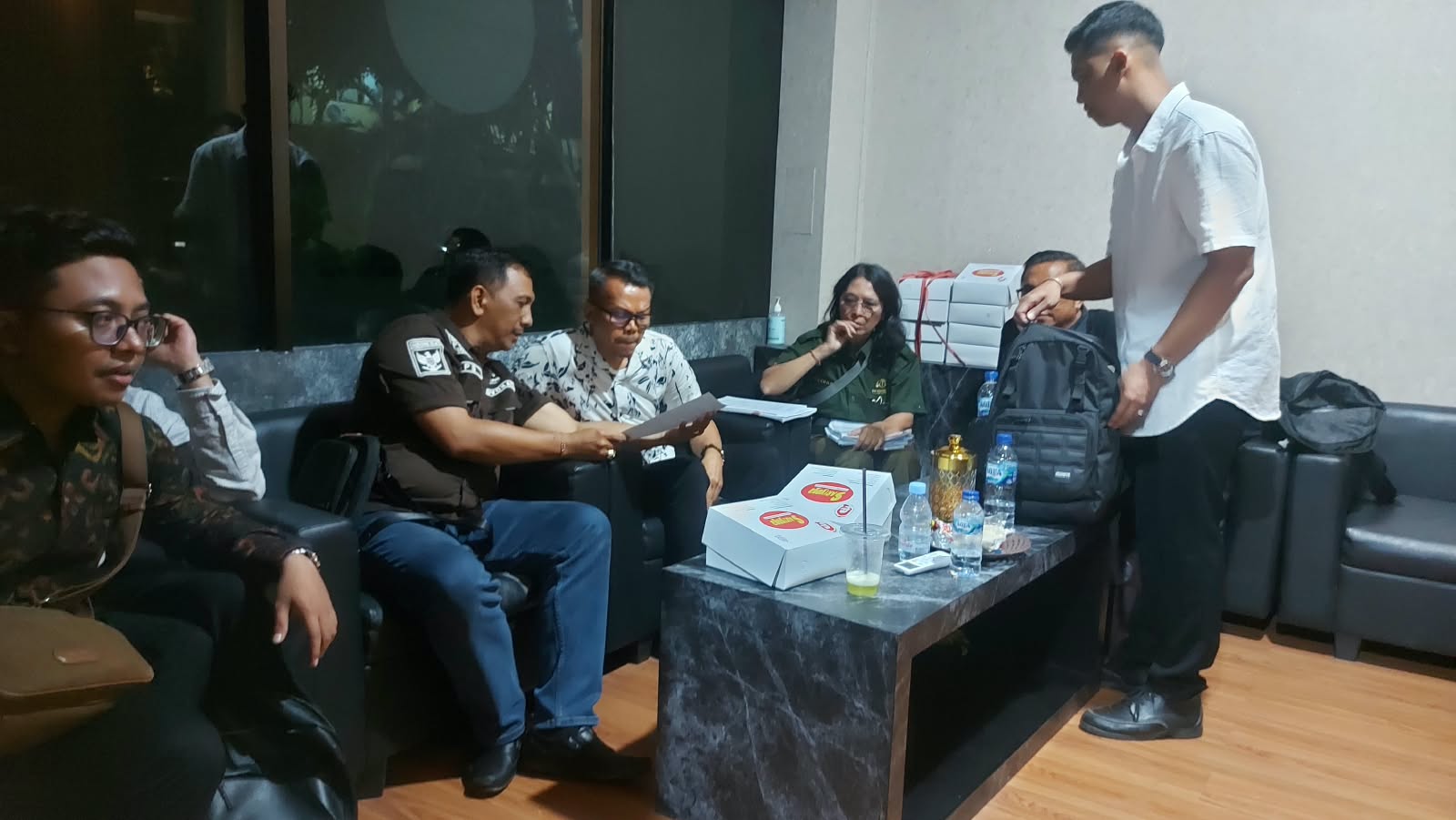
DENPASAR, BALINEWS — A single judge at the Denpasar District Court, Kadek Dedy Arcana, has ruled that the detention of I Made Daging, former head of the Bali Regional Office of the National Land Agency (BPN), was unlawful. The pretrial ruling, delivered in Courtroom Kartika on Tuesday (October 13, 2026), ordered his immediate release from detention.
In the ruling, the judge declared Detention Order Number SP.Han/31/IX/WJA/Ditreskrimsus/1.24/2026/Ditreskrimsus, dated September 16, 2026, unlawful and without binding legal force.
Made Daging’s lawyer, Gede Pasek Suardika, welcomed the decision but argued that fundamental questions remained regarding the relevance of the evidence to the alleged document forgery charges against his client.
“First, of course, we thank the Honorable Single Judge for upholding the rules, particularly those governing detention procedures under the new Criminal Procedure Code,” Pasek said when met outside the Bali Regional Police’s General Criminal Investigation Directorate (Ditreskrimum) on Tuesday evening.
According to Pasek, the assessment of evidence should not focus solely on the number of witnesses, experts, or documents presented by investigators. He argued that the relationship between the evidence and the elements of the alleged criminal offense must also be examined.
Although the court ruled that Made Daging’s detention was unlawful, Pasek acknowledged that the judge upheld the legality of his client’s suspect designation. He said the substance of the alleged forgery case still needed to be examined through the subsequent legal process.
Lawyer Questions Three Aspects of the Alleged Forgery
Pasek identified three disputed aspects concerning the allegedly inaccurate contents of the document involved in the case: the use of a drone, the land measurement process, and the designation of land boundaries.
Regarding the drone, Pasek claimed that investigators already possessed photographs, images, and metadata showing the dates and times of the recordings.
He also said the Ombudsman had been present at the land measurement site and had attended a presentation of the measurement results. According to Pasek, these circumstances should be examined to determine whether the document issued by Made Daging accurately reflected what had occurred.
“When discussing evidence in a forgery case, the issue is not the number of people involved, but the correlation between the evidence and the allegation,” Pasek said.
He questioned whether the evidence presented by investigators was directly relevant to the elements of the alleged offense. However, his statements concerning the drone documentation and land measurement remain claims made by the defense and have yet to be tested through the legal process.
Pasek also questioned whether the criminal case would proceed despite the court’s decision to uphold the suspect designation. He argued that the handling of the case should provide legal certainty and a clear explanation of the grounds for any further proceedings.
Lawyer Pursues Legal Action Over Use of Disputed Document
In addition to challenging the detention and suspect designation, Pasek said his legal team had reported the alleged use of a document suspected of being forged during the investigation and questioning process, including its use in official police examination records.
He clarified that the complaint did not focus solely on the issuance of the document in 1985, but rather on its alleged use during the investigation despite, he claimed, the submission of information highlighting discrepancies in comparison documents.
Pasek said his team possessed several supporting documents, including court rulings, pipil land records, and village certificates. According to him, these documents contain differing descriptions of the boundaries of the land in dispute.
“If Mr. Tarif and his colleagues maintain that the document is genuine, let them prove it. We have several comparison documents, not just one,” Pasek said.
He stated that his team was prepared to pursue legal proceedings to establish the document’s authenticity and examine how it had been used. He also argued that the alleged use of the document should be investigated comprehensively, taking into account information previously submitted during questioning.
Nevertheless, the alleged use of a forged document has not been established as fact. The document’s authenticity and whether a criminal offense occurred must be determined through an investigation and the applicable legal procedures.
Suspect Designation Remains Valid
The pretrial ruling declaring Made Daging’s detention unlawful does not automatically invalidate his suspect designation. In this case, the judge upheld the legality of that designation.
Pasek said his team was prepared to defend Made Daging if the case proceeded to trial. He expressed confidence that the evidence held by the defense could be used to challenge the forgery allegations against his client.
As of publication, no official response from Bali Regional Police investigators addressing the lawyer’s objections, including his claims concerning the drone evidence and land measurement, had been included in the available information.
The pretrial ruling marks a significant development in the case against Made Daging. However, the alleged document forgery and the future course of the criminal proceedings remain subject to the applicable legal process.