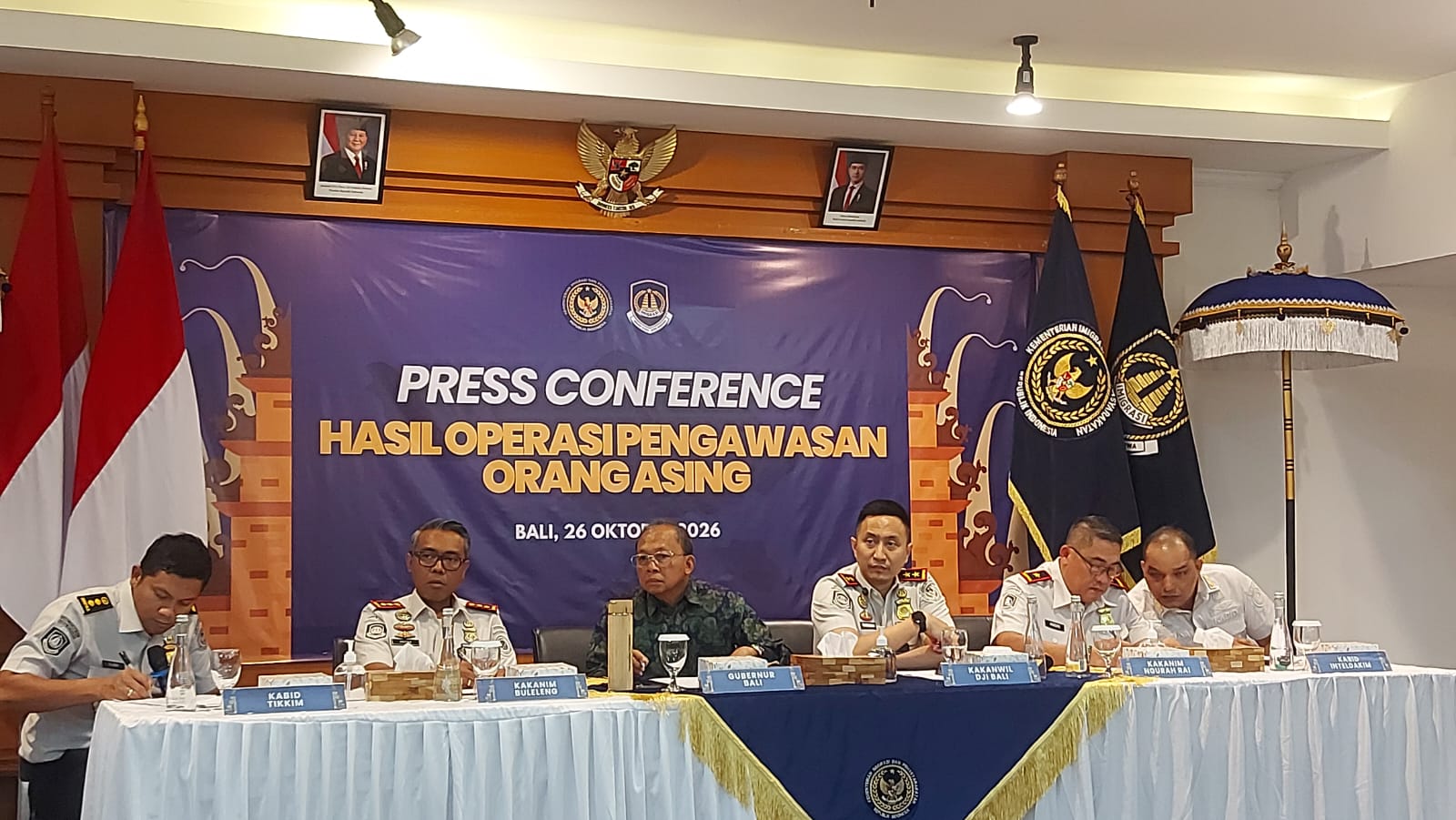
DENPASAR, BALINEWS – The Ngurah Rai Class I Special Immigration Office detained 17 foreign nationals suspected of misusing their residence permits to operate an online personal lending business from a villa in Dalung, North Kuta, Badung Regency, Bali.
The detention was announced during a press conference at the Ngurah Rai Immigration Office on Monday, October 26, 2026, attended by Bali Governor Wayan Koster.
During the press conference, Koster reaffirmed the Bali Provincial Government’s commitment to regulating the activities of foreign nationals and foreign investment to ensure compliance with Indonesian law while protecting the island’s social order and cultural values.
Koster said the provincial government had taken several measures to regulate businesses involving foreign investment, known in Indonesia as Penanaman Modal Asing (PMA). One of these measures involved coordination with the Minister of Investment regarding the closure of certain business classifications available to foreign investors subject to minimum capital requirements.
According to Koster, several business classifications have been closed and can no longer be established in Bali. He said the policy forms part of broader efforts to regulate foreign investment entering the island.
“Several business classifications have been closed, meaning they can no longer be opened in Bali,” Koster said during the press conference.
In addition to restricting certain business activities, the provincial government has begun implementing regional regulations governing land-use conversion and nominee ownership practices. Nominee arrangements involve using another person’s name to hold or control property or other assets.
Koster said enforcement against such practices would be carried out gradually and in coordination with relevant stakeholders. He emphasized that the government needed to ensure effective enforcement while maintaining a healthy investment climate in Bali.
“We have begun putting these matters in order gradually. Enforcement must proceed properly without disrupting Bali’s investment climate,” he said.
Koster also called on members of the public and the media to report activities suspected of violating applicable regulations. He noted that the provincial government had limited capacity to monitor every location directly, making public participation important in identifying potential violations.
He stressed that Bali remained open to foreign tourists and investors. However, all activities conducted on the island must comply with Indonesian law and respect Bali’s cultural values and applicable regulations.
Koster expressed support for firm and prompt action by immigration authorities in addressing violations involving foreign nationals. He also called for stronger and more regular coordination between the provincial government and immigration officials to improve oversight of foreign nationals’ activities across Bali.
According to Koster, tourism management involves more than economic contributions. It also requires maintaining security, public order, and respect for local cultural values.
The Bali Provincial Government, he added, remains committed to maintaining a tourism industry that is rooted in local culture, upholds dignity, and benefits the community.
The case involving the 17 foreign nationals suspected of misusing their residence permits is among the issues drawing attention to the supervision of foreign nationals in Bali. Further action in the case falls under the authority of immigration officials in accordance with applicable laws and regulations.
The provincial government hopes that stronger oversight and law enforcement will help prevent similar violations while preserving Bali’s reputation as an international tourism destination that upholds the rule of law and respects its cultural heritage.