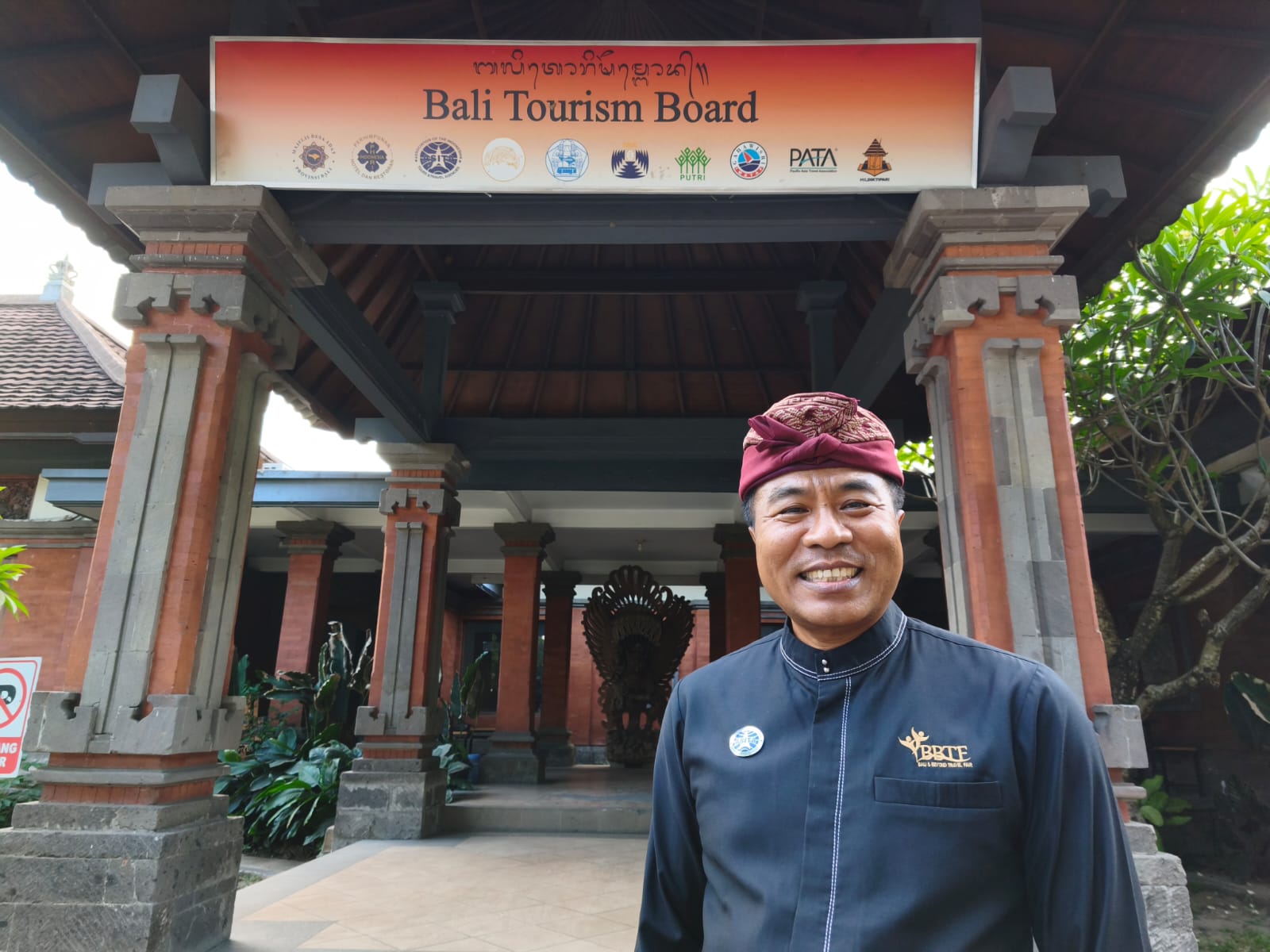
DENPASAR, BALINEWS – I Putu Winastra, S.AB., M.A.P., Chairman of the Bali Regional Board of the Association of Indonesian Tours and Travel Agencies (ASITA), has stressed that tipping is not mandatory for tourists visiting Bali. He also cautioned against generalizing that foreign tourists are more likely to give tips than domestic visitors.
Winastra made the statement during a press conference at the Bali Tourism Board (BTB) building in Denpasar on Thursday (October 8, 2026), ahead of the 15th ASITA Bali Regional Conference (MUSDA XV ASITA Bali 2026).
According to Winastra, tipping is a voluntary expression of appreciation for the services tourists receive. Therefore, a tourist’s country of origin should not be used as a benchmark for determining their willingness to tip or the amount they give.
“Tipping is a matter of willingness, regardless of where tourists come from, whether overseas or from within Indonesia. It is a way of expressing gratitude for the service they receive,” Winastra said.
He explained that domestic tourists may also give substantial tips when they are satisfied with the services provided. This applies across various tourism sectors, including travel agencies, tour guides, drivers, restaurant staff, and hotel employees.
Winastra said he had personally received tips from domestic tourists that exceeded his expectations. In his view, such experiences demonstrate that tipping depends more on customer satisfaction than on a tourist’s nationality.
“When domestic tourists feel comfortable and are satisfied with the service, they can give tips that are significantly higher than those given by foreign tourists. The opposite can also happen,” he said.
Winastra emphasized that there is no general requirement for tourists to tip while visiting Bali. Specific arrangements may apply to certain services where tipping requirements have been established, such as some cruise ship services.
He urged tourism operators to provide the best possible service to every visitor, regardless of whether they are domestic or international tourists.
“As tourism industry players, we are obliged to provide the best possible service to every tourist who comes to Bali. We do not discriminate against visitors,” he stressed.
In addition to addressing the tipping debate, Winastra highlighted the importance of enforcing regulations against illegal tourism businesses. He said ASITA Bali supports consistent law enforcement to ensure that tourism operations comply with applicable regulations.
He added that ASITA Bali members also educate tourists before their arrival and during their stay about local rules and guidelines, including what is permitted and prohibited in Bali.
According to Winastra, professionalism, service quality, and compliance with regulations are essential to maintaining a sustainable tourism industry in Bali. Tipping, meanwhile, should remain a voluntary expression of appreciation rather than a basis for differentiating between visitors.
He reiterated that all tourists deserve equal treatment, regardless of their nationality or the amount of money they choose to give as a tip.