DENPASAR, BALINEWS — Several factions in the Bali Regional Legislative Council (DPRD Bali) have raised concerns over infrastructure funding and the continuation of major development projects in the province’s proposed 2027 regional budget.
The Gerindra-PSI faction questioned whether the allocation for roads, networks, and irrigation would be sufficient, while the Golkar faction warned that substantial spending on major projects could limit funding available for essential infrastructure and public services.
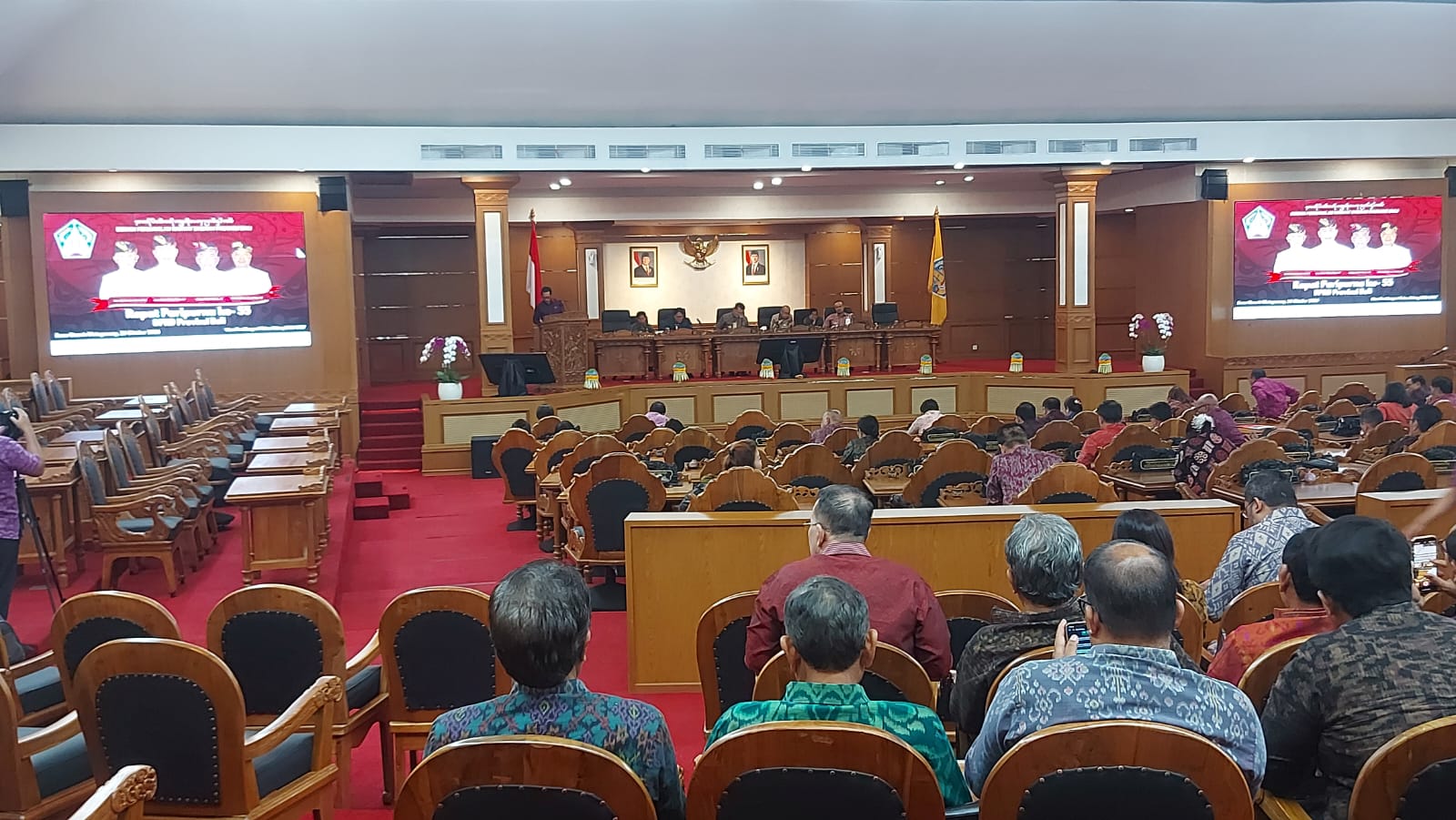
The concerns were raised during a general factional debate on Bali’s proposed 2027 Regional Revenue and Expenditure Budget (RAPBD) at the Bali DPRD office on Monday, October 26, 2026.
Gede Harja Astawa, chairman of the Gerindra-PSI faction, highlighted the proposed capital expenditure allocation of Rp79.62 billion for roads, networks, and irrigation. He said the amount was lower than the previous year’s allocation.
His faction called on the provincial government to explain whether the proposed funding adequately accounts for damaged provincial roads, irrigation network maintenance, and public safety risks.
Gerindra-PSI argued that infrastructure maintenance must remain a priority because it directly affects public safety and the smooth operation of economic activities.
“Let us not allow budget savings today to create greater social and economic costs in the future,” Harja Astawa said while presenting the faction’s position.
Beyond basic infrastructure, Gerindra-PSI requested detailed explanations of the physical progress, budget realization, completion targets, and public benefits of several strategic projects: the Besakih Sacred Area, Turyapada Tower, and the Bali Cultural Center.
Regarding the Besakih Sacred Area, the faction sought clarification on construction progress, financial realization, completion plans, operating costs, and the project's economic, social, and cultural benefits for local communities.
The Turyapada Tower project also came under scrutiny, particularly regarding its investment value, physical and financial progress, intended use, operating expenses, and potential impact on tourism, the regional economy, and the environment.
For the Bali Cultural Center, Gerindra-PSI requested information on construction progress, completion targets, operating costs, and the project's contribution to cultural preservation and the development of the creative economy.
The faction emphasized that major development projects must deliver tangible benefits to the public rather than leave behind impressive structures without clearly defined functions.
It also called for comprehensive evaluations of strategic projects to prevent stalled construction, wasteful spending, and long-term operating costs that could place additional pressure on the regional budget.
The Golkar faction expressed similar concerns, focusing on the proposed Rp337 billion in capital expenditure for strategic infrastructure and economic transformation, allocated to continuing development of the Besakih Sacred Area and the Bali Cultural Center.
Golkar acknowledged that both projects could become important historical legacies and new attractions for Bali’s cultural tourism sector. However, the faction warned that the scale of funding devoted to these landmark developments needed careful scrutiny to ensure other infrastructure needs were not sidelined.
“However, the downside is particularly significant. The capital funding absorbed by these mega-projects in the southern and eastern regions has sacrificed budgetary room for repairing damaged roads, maintaining rural subak irrigation networks, and addressing waste management problems in other regencies and municipalities,” said I Wayan Gunawan, a representative of the Golkar faction.
The concerns raised by both factions highlight questions about spending priorities, equitable development, and the effectiveness of regional budget allocations as Bali prepares its 2027 budget.
The provincial government is expected to clarify the basis for its funding decisions, identify urgent infrastructure priorities, and explain how major projects will deliver lasting public benefits while remaining financially sustainable.