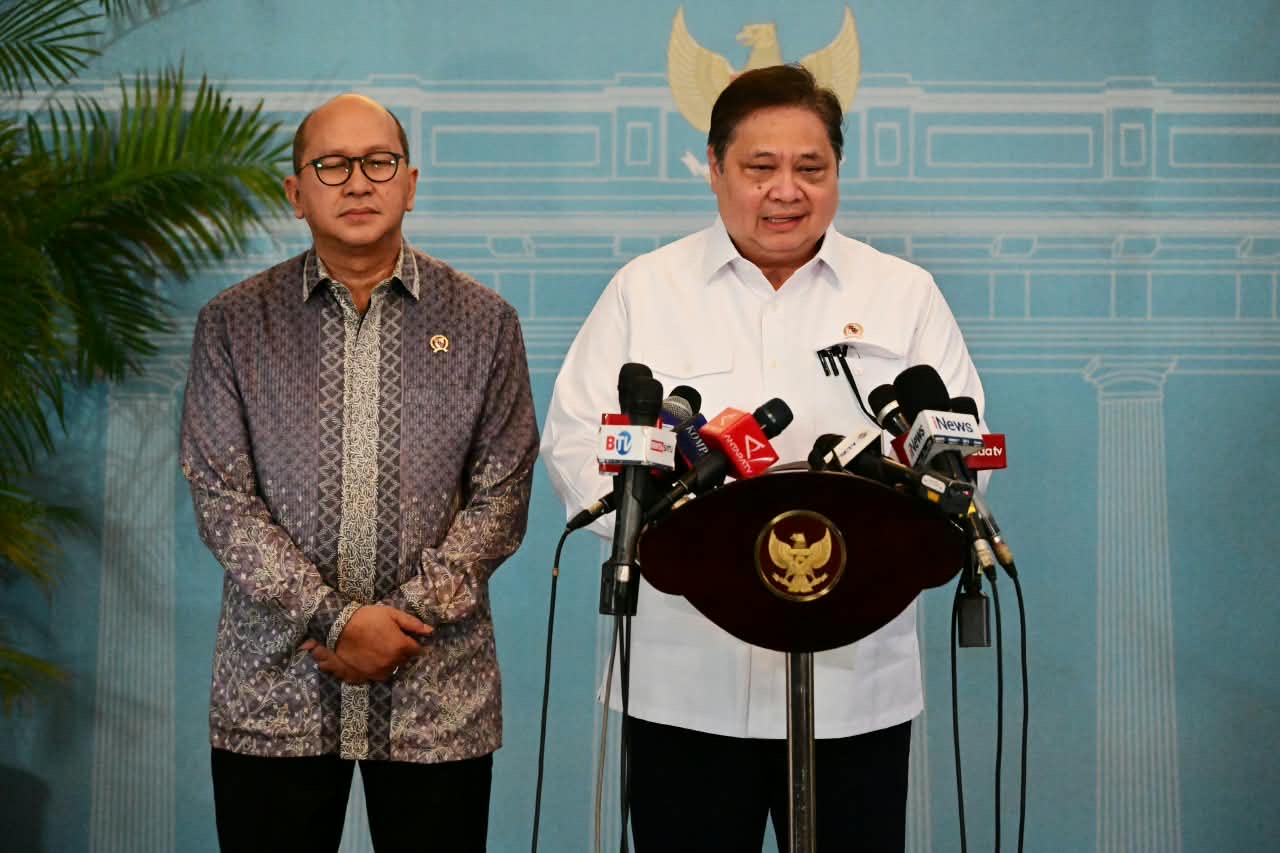
JAKARTA, BALINEWS — Indonesia’s economy showed signs of resilience at the start of the fourth quarter of 2026, with inflation remaining within the national target range, the trade balance continuing to post a surplus, and manufacturing activity returning to expansion territory.
Data released on Thursday (Oct. 1, 2026) showed that Indonesia’s inflation rate stood at 3.28 percent year-on-year in September, remaining within the government’s target range of 2.5 percent plus or minus 1 percentage point.
Core inflation eased to 2.84 percent year-on-year, while administered-price inflation declined to 3.25 percent. Volatile food inflation, however, remained higher at 5.03 percent, driven by demand conditions and lower production of several horticultural commodities amid extreme weather, El Niño and natural disasters.
The government attributed the overall inflation performance to coordination between the central government, Bank Indonesia and regional governments through the Central Inflation Control Team and Regional Inflation Control Teams.
Entering the fourth quarter, the government is preparing measures to maintain purchasing power and contain price pressures. These include the third phase of the Family Hope Program (PKH), monthly rice assistance of 10 kilograms from October through December 2026, and accelerated distribution of government-subsidized medium-grade rice through state-owned logistics company Bulog.
The government is also strengthening food supply stability through the Affordable Food Movement, government rice reserves and increased interregional cooperation.
Trade Surplus Reaches US$7.25 Billion
Indonesia recorded a cumulative trade surplus of US$7.25 billion from January to August 2026.
The figure was supported by a US$28.54 billion surplus in non-oil and gas trade, while the oil and gas sector recorded a US$21.29 billion deficit.
In August alone, Indonesia’s trade surplus jumped to US$3.55 billion from just US$120 million in July, marking the second consecutive monthly surplus.
The non-oil and gas surplus rose to US$6.09 billion in August from US$3.10 billion a month earlier. Meanwhile, the oil and gas deficit narrowed to US$2.54 billion from US$2.98 billion.
Non-oil and gas exports during January–August were supported by several major commodities. Iron and steel exports increased 4.88 percent to US$19.18 billion, exports of crude palm oil and its derivatives rose 6.57 percent to US$17.75 billion, while coal exports grew 4.31 percent to US$16.58 billion.
Exports from the manufacturing sector increased 6.62 percent and became a major contributor to export growth, reflecting continued expansion of downstream industrial processing.
On the import side, raw materials and intermediate goods remained dominant at US$133.38 billion, while capital goods imports reached US$36.74 billion. Together, the two categories accounted for 91.3 percent of total imports.
Imports of machinery and mechanical equipment rose 15.26 percent, while imports of electrical machinery and equipment increased 22.94 percent. The increases indicate continued demand for production inputs and capital goods amid domestic industrial activity and investment.
Manufacturing Returns to Expansion
Indonesia’s manufacturing sector also showed a stronger performance in September.
The Manufacturing Purchasing Managers’ Index (PMI), compiled by S&P Global, rose to 52.4 in September from 49.8 in August. A reading above 50 indicates expansion in manufacturing activity.
The September reading represented the strongest improvement in business conditions since February 2026, according to the data.
The recovery was supported by stronger new orders and output, continued export growth for a second consecutive month, new projects and improving purchasing power.
New orders increased at their fastest pace since February, while new export orders recorded their strongest growth since May 2022.
Higher production was accompanied by renewed employment growth as well as increases in input purchases and inventories. At the same time, cost pressures began to ease, with input and output price inflation slowing to their lowest levels in six months.
Business confidence regarding production over the next 12 months also remained high, supported by expectations of continued domestic demand, export opportunities and new projects.
Coordinating Minister for Economic Affairs Airlangga Hartarto said the government would continue to balance economic stability with growth.
“Controlled inflation, the return of manufacturing to expansion and continued export growth show that the foundations of Indonesia’s economy remain strong amid ongoing global uncertainty,” Airlangga said.
He said the government would continue strengthening policy coordination to protect household purchasing power, encourage investment and industrial activity, and improve the competitiveness and added value of Indonesian products.
With inflation remaining within the target range, the trade balance continuing to post surpluses and manufacturing returning to expansion, the government is maintaining its policy mix to support economic stability and sustain growth through the end of 2026.