JAKARTA, BALINEWS — The Indonesian government is preparing a strategy to accelerate high-quality, inclusive and sustainable economic growth amid an improving but still uncertain global economic outlook.
According to OECD projections, global economic growth is expected to reach 2.8 percent in 2026 and rise to 3.1 percent in 2027. However, the recovery remains vulnerable to geopolitical tensions, trade disputes, logistics disruptions and financial-sector risks.
These global developments could put pressure on domestic energy and commodity prices while increasing exchange-rate and capital-flow volatility. At the same time, improving external demand is expected to provide opportunities for Indonesia to increase exports.
Susiwijono Moegiarso, Secretary of the Coordinating Ministry for Economic Affairs, said Indonesia needs to strengthen investment, connectivity and logistics to mitigate the impact of global pressures.
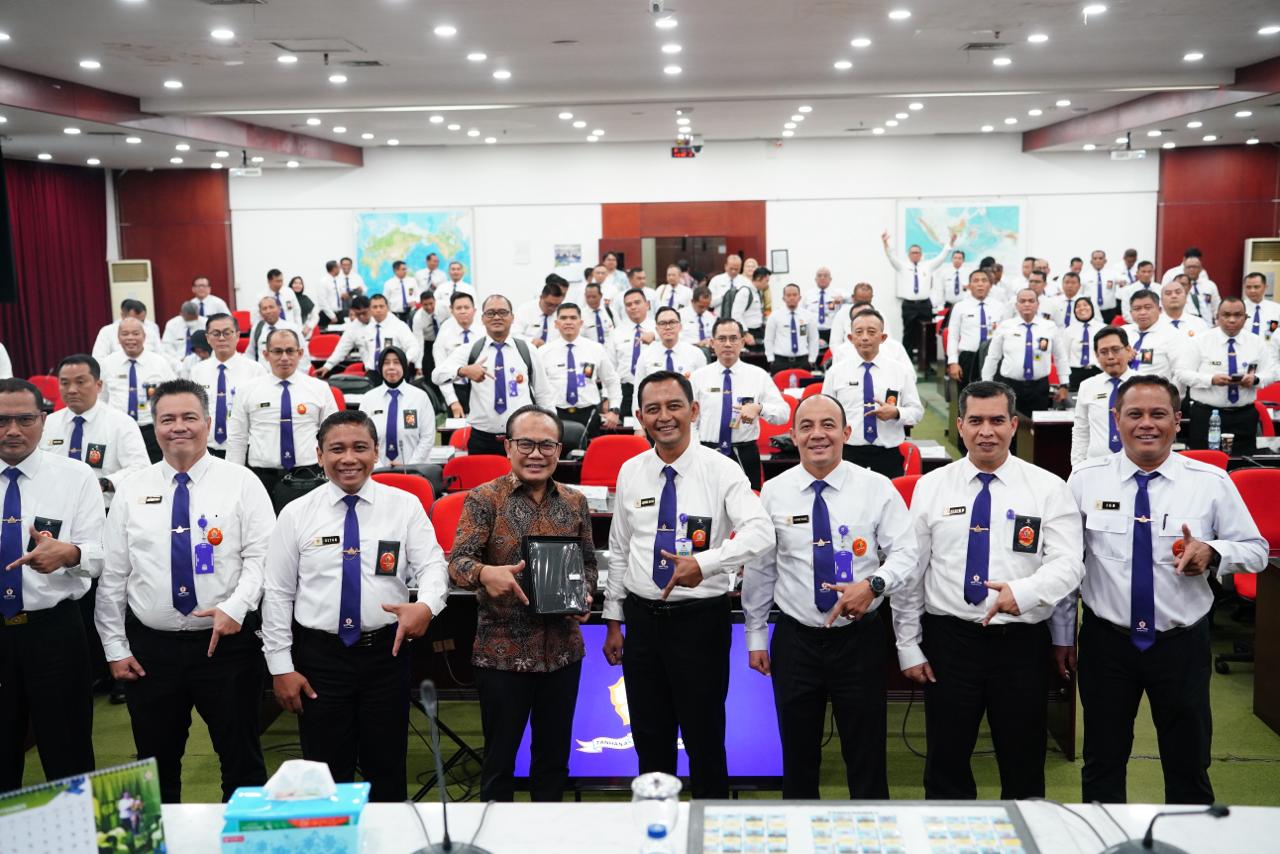
“2027 is relatively more optimistic, both in terms of global growth projections and Indonesia’s outlook. Therefore, we need to strengthen investment, connectivity and logistics to mitigate the impact of global pressures,” Susiwijono said during the National Leadership Preparation and Development Education (P4N) program at the National Resilience Institute (Lemhannas RI) in Jakarta on Thursday (Oct. 1, 2026).
Despite global uncertainty, Indonesia’s economy grew 5.45 percent on a cumulative basis in the first half of 2026. The government said the growth rate was among the highest recorded by G20 member countries.
Macroeconomic stability has also remained relatively strong. Inflation stood at 3.19 percent year-on-year in August 2026, remaining within the government’s target range of 2.5 percent plus or minus 1 percentage point.
Investment realization reached Rp1,010.6 trillion in the first half of 2026, representing annual growth of 7.2 percent. Meanwhile, Indonesia’s Consumer Confidence Index stood at 118.5 in August, indicating continued consumer optimism.
Three Engines of Growth
The Coordinating Ministry for Economic Affairs is coordinating priority sectors and strategic initiatives aimed at accelerating economic growth during the 2025–2029 period.
The strategy is built around three growth engines. The first is the revitalization of conventional economic engines, the second is the development of new economic engines, and the third focuses on increasing productivity and the competitiveness of Indonesia’s human resources.
In the manufacturing sector, the government is promoting the development of a national electric-vehicle ecosystem, the semiconductor industry and the revitalization of labor-intensive industries.
In the digital economy, the government is supporting digital infrastructure development, including a plan to establish a data center in one of Indonesia’s Special Economic Zones.
In the energy sector, policies are focused on strengthening energy security while increasing the use of cleaner energy sources.
The government is also seeking to raise productivity by improving human-resource quality through vocational education and the National Internship Program. Greater access to financing for productive and export-oriented sectors is also part of the strategy.
Susiwijono said several supporting conditions, or “enablers,” would be essential to the implementation of the three growth engines.
“The enablers that need to be strengthened are macroeconomic stability, household purchasing power, efficiency and a supportive investment climate, a stronger financial sector, and a stronger social safety net,” he said.
Indonesia Steps Up AI Engagement
Alongside manufacturing, energy and the digital economy, the government is also focusing on the rapid development of artificial intelligence (AI).
Indonesia officially became a founding member of the World Artificial Intelligence Cooperation Organization (WAICO) on July 16, 2026, alongside 28 other founding countries.
Indonesia’s participation is aimed at helping bridge the global AI divide through the principles of AI for good and for all, inclusive global AI governance, and cooperation in capacity building and AI investment for civilian purposes.
“We must be active in AI forums, because otherwise we will fall behind. In essence, AI is currently developing at an extraordinary pace,” Susiwijono said.
The government views the development of AI as an area requiring stronger national capacity so that the technology can contribute to productivity and economic competitiveness.
Overall, the government’s strategy is focused on maintaining economic growth while strengthening Indonesia’s resilience to changes in the global economy.
Investment, industrial development, connectivity, logistics, human-resource quality, the financial sector, energy security, the digital economy and AI development are being positioned as key components of Indonesia’s effort to achieve stronger, more inclusive and sustainable economic growth.