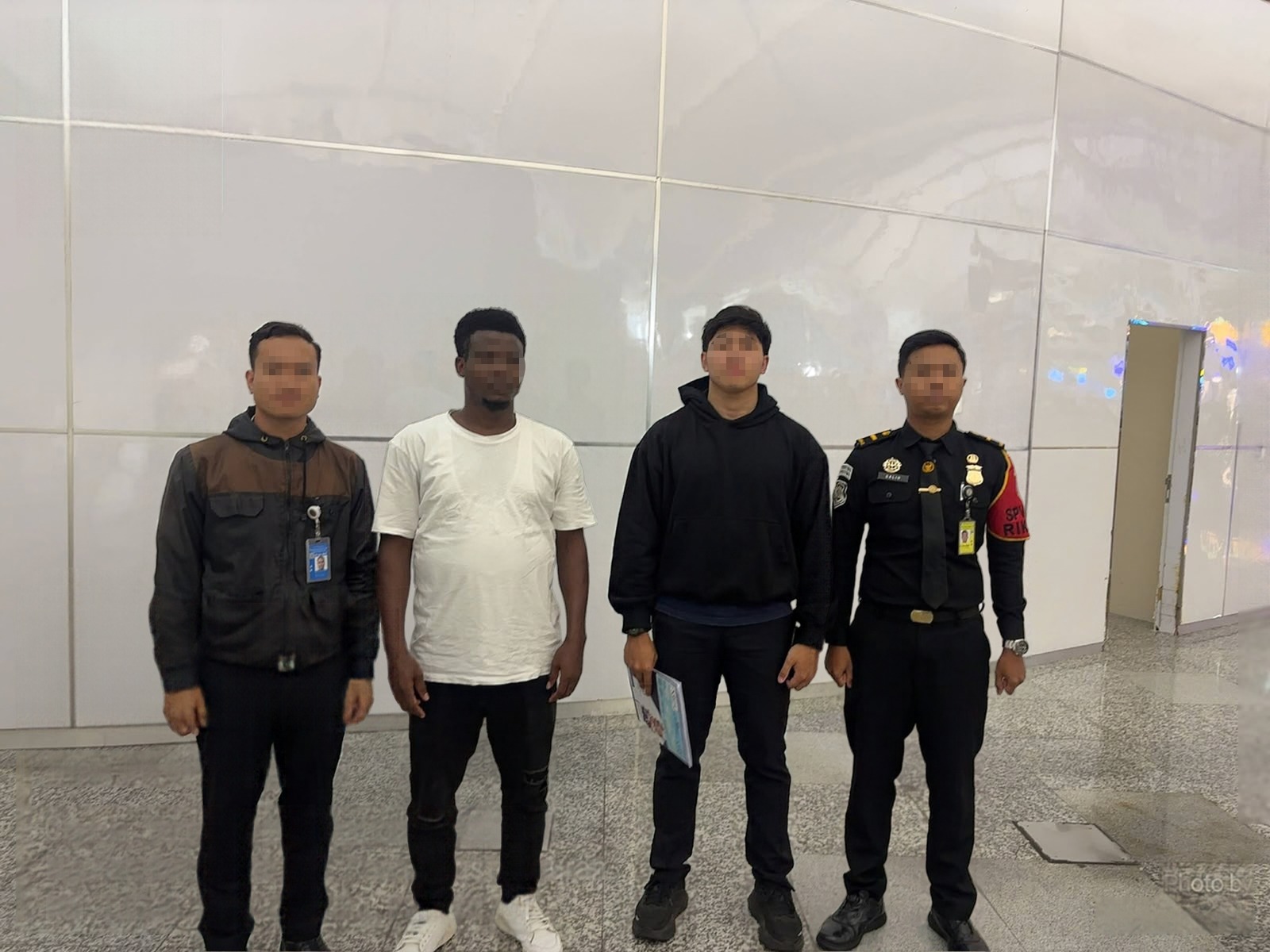
BADUNG, BALINEWS — The Denpasar Immigration Detention Center (Rudenim Denpasar) deported eight foreign nationals from five countries between Sept. 30 and Oct. 7, 2026, for various immigration violations, including overstaying, working illegally, and lacking valid travel documents.
The deportees were citizens of Russia, India, Nigeria, the United States and Bulgaria. They were subject to Immigration Administrative Actions, or Tindakan Administratif Keimigrasian (TAK), for violations ranging from failing to settle restaurant bills and overstaying their visas to misusing visitor visas for prostitution-related activities.
Among those deported were a 36-year-old Russian woman identified by the initials PB and her seven-year-old daughter, ZB.
PB attracted public attention in late August after several business owners in the South Kuta area reported her over alleged unpaid purchases and restaurant meals. She was accused of taking goods and consuming food after promising to make payments by bank transfer, but the payments were reportedly never completed.
Following up on the reports, officers from the Ngurah Rai Immigration Office traced and detained PB and her daughter at a restaurant in the Pecatu area on Aug. 26.
An immigration investigation found that the two were holders of Visa on Arrival (VoA) permits and had overstayed for 318 days.
After spending 35 days in detention at the Denpasar Immigration Detention Center, PB and her daughter were deported to Russia on Sept. 30. Their final destination was Moscow.
The next deportation took place on Oct. 5, involving a 23-year-old Indian national identified as DMIA.
DMIA had overstayed his immigration permit by 30 days and was unable to pay the overstay administrative fee of Rp1 million (approximately US$60) per day.
He was subsequently deported to India, with Bengaluru as his final destination.
On Oct. 6, four more foreign nationals were deported: three Nigerian nationals — a 23-year-old woman identified as TE and two men identified as EDN, 30, and UPJ, 40 — as well as a 42-year-old American woman identified as JLH.
TE had previously been detained along with 12 other foreign nationals during a joint operation by Bali immigration authorities and the Bali Police in the Umalas area of Badung on Sept. 17.
Authorities found that TE had been working as a sex worker while holding a visitor visa.
Meanwhile, EDN had overstayed his immigration permit by three years and four months. UPJ was deported for not possessing valid travel documents, while JLH had overstayed by 54 days.
In EDN's case, immigration officers first accompanied him to the Nigerian Embassy in Jakarta to obtain an Emergency Travel Certificate (ETC). He was deported on the same day through Soekarno-Hatta International Airport after the document was issued.
The three Nigerian nationals were deported to Lagos, Nigeria, while JLH was sent to Guam, a U.S. territory.
The final deportation during the period took place on Oct. 7, when a 49-year-old Bulgarian national identified as GTH was deported after overstaying his immigration permit by 65 days.
GTH was deported to Sofia, Bulgaria.
Denpasar Immigration Detention Center Chief Teguh Mentalyadi said all eight deportations were carried out as follow-ups to Immigration Administrative Actions imposed on the respective foreign nationals.
“Every foreign national staying in Indonesia is required to comply with immigration regulations and respect the law and public order. Once all procedures and documents required for their departure have been completed, we carry out the deportation in accordance with applicable regulations,” Teguh said.
In addition to deportation, the eight foreign nationals have also been proposed for inclusion on Indonesia's immigration blacklist, which would prevent them from re-entering the country for a period determined by the authorities.
Teguh said the proposed bans were based on Article 102 of Law No. 6 of 2011 on Immigration.
Under the law, an entry ban may be imposed for five to 10 years, and in certain circumstances may be imposed for life, in accordance with applicable regulations.
The final duration of any entry ban, however, will be determined by the Directorate General of Immigration, taking into account the type of violation as well as the facts and circumstances of each case.